Binh Thuan Province Industrial Parks Attract Investment
Introduction to Binh Thuan Province
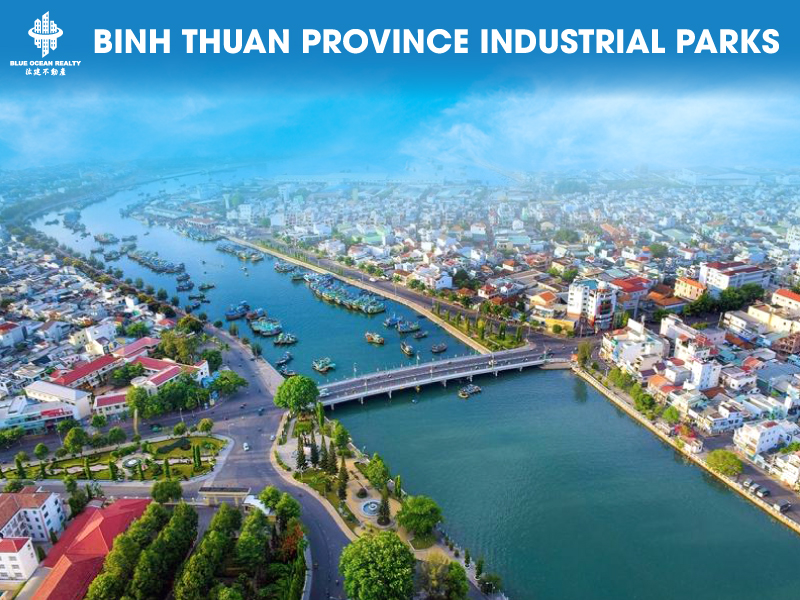
Binh Thuan is a coastal province located at the southernmost part of Vietnam’s South Central Coast region. It lies within the Southern Key Economic Zone. The provincial capital, Phan Thiet City, is located 183 km south of Ho Chi Minh City, 250 km from Nha Trang, and 1,520 km north of Hanoi along National Highway 1A.
Binh Thuan boasts a 192 km-long coastline stretching from Mui Da Chet (bordering Ca Na, Ninh Thuan) to Binh Chau (Ba Ria – Vung Tau Province). The province features mountains, plains, and coastal areas, with numerous beautiful beaches such as Mui Ne, Hon Rom, and Co Thach. Off the coast lies Phu Quy Island District, covering 16.5 km², serving as an important link between the mainland and the Truong Sa (Spratly) Archipelago.
Investment Advantages
Binh Thuan possesses a vast fishing ground of 52,000 km², one of the three largest in Vietnam, rich in high-value marine resources. The estimated reserves within 50-meter water depth reach 220,000–240,000 tons, with an annual exploitable yield of around 120,000 tons. Valuable seafood species include shrimp, scallops, blood cockles, and pearl oysters.
The province has a relatively complete transportation infrastructure — a great advantage for attracting tourism and industrial investments. Binh Thuan is located 200 km from Ho Chi Minh City and 120 km from Ba Ria – Vung Tau, connected by National Highways 1A, 55, and 28, as well as the North–South railway. This strategic location supports economic and tourism development.
Over the years, Binh Thuan’s economy has grown at an average rate of 12% per year, with abundant and diverse natural resources.
Geographical Location
Binh Thuan has a natural area of approximately 7,992 km² and is geographically positioned as follows:
- Northeast: Borders Ninh Thuan Province
- West: Borders Dong Nai Province
- South: Borders the East Sea
- North: Borders Lam Dong Province
Administrative Units
The province comprises 1 city, 1 town, and 8 districts, totaling 127 commune-level administrative units, including 12 townlets, 19 wards, and 96 communes.
Population
Binh Thuan is home to 34 ethnic groups, with the majority being Kinh, followed by Cham, Ra Glai, Hoa (mainly in Duc Nghia Ward, Phan Thiet City), Co Ho, Tay, Cho Ro, Nung, and Muong.
In 2023, the province’s population was estimated at 1,258,788, with 681,768 people employed. About 24,000 new jobs were created in 2023. The urban unemployment rate was 2.6%; the multidimensional poverty rate was 2.06%; and the average per capita income reached VND 54.3 million per year, up 5.11% from 2022.
Education
Binh Thuan has consistently focused on improving its education system, maintaining universal preschool education for 5-year-olds and compulsory primary and lower secondary education.
As of 2023, 226 out of 536 schools (42.16%) met national standards, including 59 preschools, 100 primary schools, and 66 lower secondary schools.
Healthcare
The province maintains high-quality healthcare services, continuously improving diagnosis and treatment capacity across all levels. Administrative reforms and IT applications have been implemented to enhance medical service connections and insurance coverage.
Tourism
With a warm climate year-round, clean beaches, and picturesque landscapes, Binh Thuan has become one of Vietnam’s major tourism centers. Mui Ne–Phan Thiet has been recognized as a National Tourism Area.
The province has developed a range of tourist complexes for resorts, sports, yachting, fishing, golf, and wellness tourism, particularly in Mui Ne, Ham Tan, and Tuy Phong. The Sealinks Golf Course and high-end resorts in Phan Thiet cater to both tourists and investors.
Transportation Infrastructure
Binh Thuan lies on Vietnam’s North–South transport corridor, connected by National Highways 1, 55, and 28.
- Railway: The North–South railway runs 190 km through the province with 11 stations, including Binh Thuan and Phan Thiet stations. The high-speed North–South railway and expressway also pass through the province.
- Roads: The main routes include National Highways 1A, 55, and 28, all upgraded to support economic growth.
- Aviation: Phan Thiet Airport began construction in 2015 in Thien Nghiep Commune, and a new airport is planned for northern Phan Thiet.
- Seaport: With a 192 km coastline and proximity to international shipping routes, Binh Thuan has developed Phan Thiet and Phu Quy ports, upgraded several fishing ports, and planned major ports such as Ke Ga General Port (70,000 DWT) and Vinh Tan Specialized Port.
Economic Development in 2023
In 2023, Binh Thuan achieved positive socio-economic results. The opening of the North–South Expressway (Vinh Hao–Phan Thiet and Phan Thiet–Dau Giay sections) and the hosting of “National Tourism Year 2023 – Binh Thuan: The Green Convergence” significantly boosted investment and tourism.
The province’s GRDP increased by 8.1% compared to 2022, with agriculture up 3.31%, industry and construction up 6.55%, and services up 14.37%. Per capita GRDP reached VND 86.66 million (USD 3,703), up 12.53%.
Key Development Goals 2024–2025
For 2024, Binh Thuan targets GRDP growth of 8–8.5%, labor productivity growth of 6.4%, export turnover of USD 1.011 billion, and state budget revenue of VND 10 trillion. The province aims to strengthen administrative reform and improve its business environment.
Binh Thuan Province Industrial Parks Attract Investment
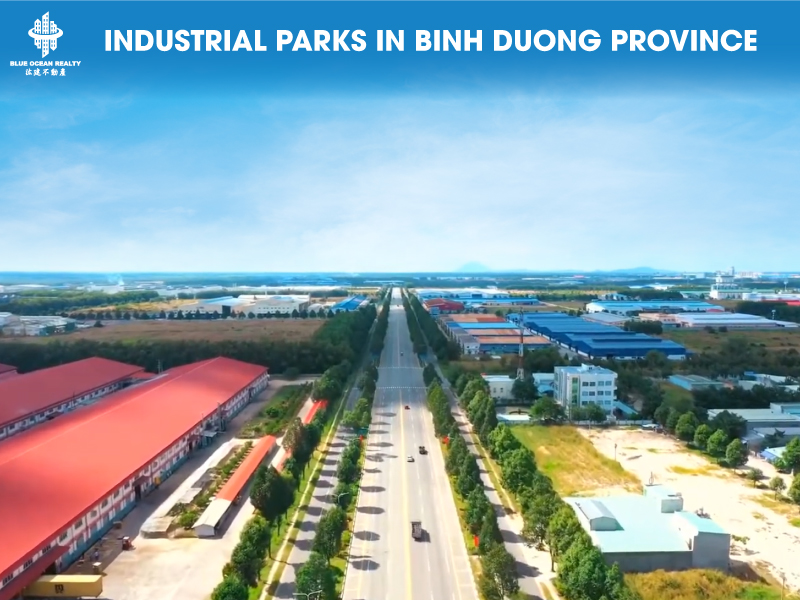
With over 25 years of industrial development, Binh Thuan currently has 9 industrial park (IP) infrastructure projects with a total investment of over VND 7,224 billion.
Five IPs are operational: Phan Thiet I, Phan Thiet II, Ham Kiem I, Ham Kiem II, and Song Binh. Three are delayed — Tuy Phong, Tan Duc, and Son My 1 — while Son My 2 has recently received investment approval from the Prime Minister.
These IPs have attracted 87 secondary projects (62 domestic and 25 foreign), with total registered capital exceeding VND 16,722 billion and USD 206.33 million. Investors come from Taiwan (China), Belize, Japan, Samoa, and China. Industrial parks have created thousands of jobs — from 2,500 workers in 1998–2005 to about 11,000 today.
Human Resource Development and Future Goals
Binh Thuan promotes sustainable industrial development by focusing on key industries, high-tech sectors, and support industries. Investment attraction is selective, prioritizing high-value, technology-driven, and environmentally friendly projects.
The province collaborates with training institutions and IP investors to forecast labor demand and prioritize local workforce recruitment.
According to the Provincial Industrial Park Management Board, Binh Thuan aims to operate 10 IPs effectively by 2030 and consider expanding or establishing 6 new IPs as needed.
The immediate goal is to complete infrastructure and fill existing IPs by 2030, focusing on developing the Tan Duc Industrial Park and forming a comprehensive complex combining industry, urban development, logistics, ports, and LNG storage in the Ham Tan – La Gi area.
Authorities will continue to support and supervise ongoing IP projects such as Son My 1, Tan Duc, and Son My 2 to ensure timely progress and attract more secondary investments.
Learn more about us:
—
Your trusted partner in Vietnam Real Estate, Industrial Parks, and Invest Vietnam.
Stay Connected:
- Fanpage: blueoceanrealtyvn
- Youtube: BlueOceanRealty , @batdongsanbor , @blueoceanrealtyvietnam
- Instagram: blueoceanrealtyvn
- Tiktok: @bortintuc
Hotline/ Zalo: +84888089696
—