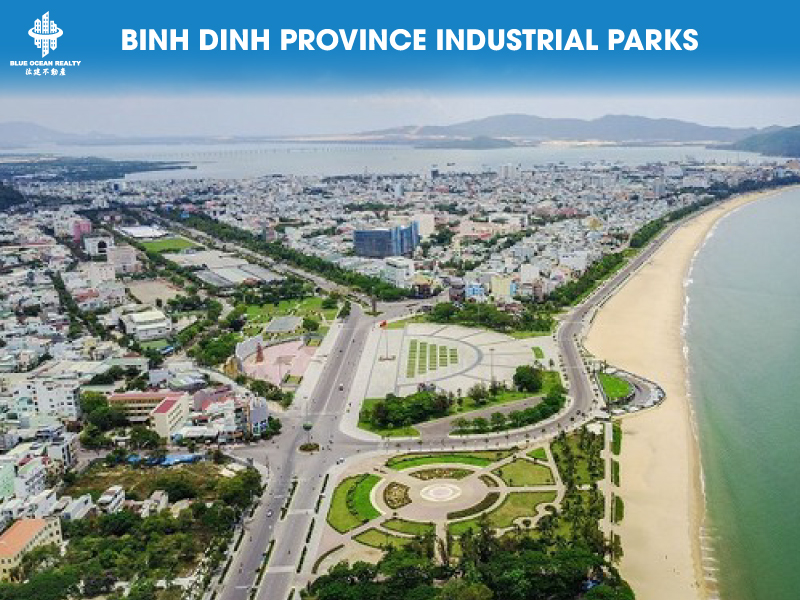
Binh Dinh is a province located in the South Central Coast region of Vietnam and is one of the five provinces of the Central Key Economic Region (together with Thua Thien Hue, Da Nang, Quang Nam, and Quang Ngai). Binh Dinh holds a particularly important geo-economic position for domestic and international economic exchanges.
Binh Dinh is considered one of the main gateways to the sea for the Central Highlands, Southern Laos, and Northeastern Cambodia. Located at the center of the North–South axis with full connectivity via National Highway 1A, the North–South railway, domestic aviation routes, and maritime transport, Binh Dinh serves as the closest and most convenient seaport access for the Central Highlands, Southern Laos, Northeastern Cambodia, and Thailand through Quy Nhon International Seaport and National Highway 19.
In addition to its strategic location, Binh Dinh possesses abundant natural resources, rich cultural and historical values, and a relatively large labor force.
Historical and Cultural Background
Binh Dinh has been a central land of Central Vietnam for nearly five centuries, once serving as the core area of the Champa Kingdom. Despite many historical ups and downs and prolonged wars, Champa culture continued to flourish here until the kingdom lost its historical role. Today, Binh Dinh still preserves a rich and diverse system of Champa cultural relics, providing valuable resources for archaeological research.
Modern Industrial Development
Binh Dinh aims to become a province with a modern industrial base and one of the major socio-economic development centers of the Central Key Economic Region and Vietnam as a whole. Economic growth is accompanied by improved living standards, environmental protection, and ensured national defense and security.
According to Decision No. 1619/QD-TTg dated December 14, 2023, approving the Binh Dinh Provincial Master Plan for the 2021–2030 period with a vision to 2050, the province targets 97% health insurance coverage by 2030.
By 2030, Binh Dinh aims to become a developed province, leading the North Central and South Central Coast regions, and serving as a southern hub for processing and manufacturing industries, services, tourism, and culture. It is also targeted to be a national center for marine economy development and a key national and international tourism destination, supported by a modern and synchronized infrastructure system.
Geographical Location
Binh Dinh Province has a natural area of approximately 6,025 km2.
- North: borders Quang Ngai Province
- South: borders Phu Yen Province
- East: borders the East Sea
Administrative Units
Binh Dinh Province includes:
- 01 city: Quy Nhon (Grade I urban area, 284.28 km2, population over 284,000), identified by the Government as the southern central city of the Central Key Economic Region, together with Da Nang and Hue
- 01 town: An Nhon
- 09 districts: Tuy Phuoc, Phu Cat, Phu My, Hoai Nhon, Hoai An, An Lao, Tay Son, Van Canh, Vinh Thanh
Population and Labor Force
The Kinh (Viet) ethnic group accounts for approximately 98% of the population. Other ethnic groups include Cham, Ba Na, and Hre, mainly living in mountainous and midland areas.
Estimated average population in 2023: 1.506 million people
- Male: 749,000 (49.7%)
- Female: 757,300 (50.3%)
- Labor force aged 15 and above in 2023: 848,500 people, accounting for 56.3% of the population.
Employment structure:
- Agriculture, forestry, fisheries: 31.1%
Industry and construction: 29.5%
- Services: 39.4%
Tourism Potential
With a coastline of 134 km, Binh Dinh features numerous pristine beaches with white sand, gentle slopes, clear blue water, and abundant sunshine year-round. The province is often referred to as the “island and sea paradise” of Vietnam.
Notable destinations include Tam Quan, Tan Thanh, Vinh Hoi, Trung Luong, Hai Giang, Yen Island, Thi Nai Lagoon – Phuong Mai Peninsula, Ghenh Rang, Quy Hoa, Ham Ho, Ho Nui Mot, Nui Ba – Hon Vong Phu, Hoi Van hot mineral springs, and Tra O Lagoon.
Ky Co Beach (Nhon Ly Commune) is crescent-shaped, surrounded by mountains on three sides and facing the sea, offering fresh air and a relaxing atmosphere.
Binh Dinh is also famous for its historical and cultural heritage, as the cradle of the Tay Son movement and the homeland of national hero Quang Trung – Nguyen Hue, with deep-rooted Sa Huynh and Champa cultural values.
A Trillion-VND Tourism Hub
Binh Dinh is renowned for traditional arts such as Hat Boi (Tuong) and Bai Choi, and as the land of martial arts with famous martial villages nationwide. Other landmarks include Ghenh Rang Tien Sa, Quang Trung Museum, Phuong Mai Peninsula, Cu Mong Pass, Han Mac Tu Tomb, Van Phong Weir, and Quy Nhon Cathedral.
The province aims to become a “trillion-VND tourism hub,” targeting 8 million visitors by 2025 with tourism revenue of VND 13,000 billion.
Transportation Infrastructure
According to the provincial master plan for 2021–2030 with vision to 2050, Binh Dinh will invest synchronously in transportation infrastructure to support socio-economic growth.
Railway
- Upgrade Dieu Tri Station into a multimodal hub
- Build two new freight railway stations in Phuoc Loc (Tuy Phuoc) and Canh Vinh (Van Canh)
- Develop urban railway connecting Quy Nhon City with Cat Tien, An Nhon, Phu Cat Airport, and Canh Vinh
Road Network
Nine key economic corridors include:
- National Highway 19 (main regional axis connecting Central Highlands to Quy Nhon Port)
- National Highway 1 (national economic development axis)
- National Highways 19B, 19C, 1D
- Coastal Road DT639
- Provincial Roads DT638, DT629, DT630
Airport
Phu Cat Airport will be expanded with a new terminal, additional runway, and upgraded apron.
- By 2030: Class 4E airport, 5 million passengers/year, 12,000 tons cargo/year
- By 2050: Class 4E airport, 7 million passengers/year, 27,000 tons cargo/year
Seaports
Upgrade and expand Quy Nhon – Thi Nai – Dong Da port cluster and Nhon Hoi port area.
Dry Ports
Plan to develop additional inland container depots with a total area of 71 ha.
Binh Dinh Economic Performance in 2023
- GRDP growth: 7.61%
- Economic scale: VND 117,668.8 billion
- Industrial Production Index (IIP): +3.5%
- Total investment capital: VND 54,097.3 billion (+15.5%)
- Retail sales and services revenue: VND 103,161.9 billion (+15.1%)
- Export value: USD 1.6 billion
- Average income per capita: VND 53.6 million/year
Industrial Park Development
Binh Dinh currently has 7 operating industrial parks with a total area of over 2,850 ha, including Phu Tai, Long My, Nhon Hoa, Nhon Hoi A, Nhon Hoi B, Hoa Hoi, and Becamex VSIP Binh Dinh.
Industrial parks have become a “magnet” for investment, attracting capital, supporting services, and contributing significantly to the provincial budget.
The province currently hosts 310 projects from 216 enterprises, employing approximately 22,000 workers, with average annual revenue and export growth of 12%, and budget contribution of nearly VND 1,000 billion per year.
Development Targets
By 2025:
- Complete Phase 1 infrastructure of Hoa Hoi Industrial Park
- Complete 30–40% infrastructure of Becamex Industrial Park
- Achieve high occupancy rates in Nhon Hoa, Nhon Hoi A, and Hoa Hoi IPs
Special attention is given to social housing. Under Decision No. 388/QD-TTg, Binh Dinh is assigned to develop 12,900 social housing units for low-income residents and industrial workers.
Learn more about us:
—
Your trusted partner in Vietnam Real Estate, Industrial Parks, and Invest Vietnam.
Stay Connected:
- Fanpage: blueoceanrealtyvn
- Youtube: BlueOceanRealty , @batdongsanbor , @blueoceanrealtyvietnam
- Instagram: blueoceanrealtyvn
- Tiktok: @bortintuc
Hotline/ Zalo: +84888089696
—