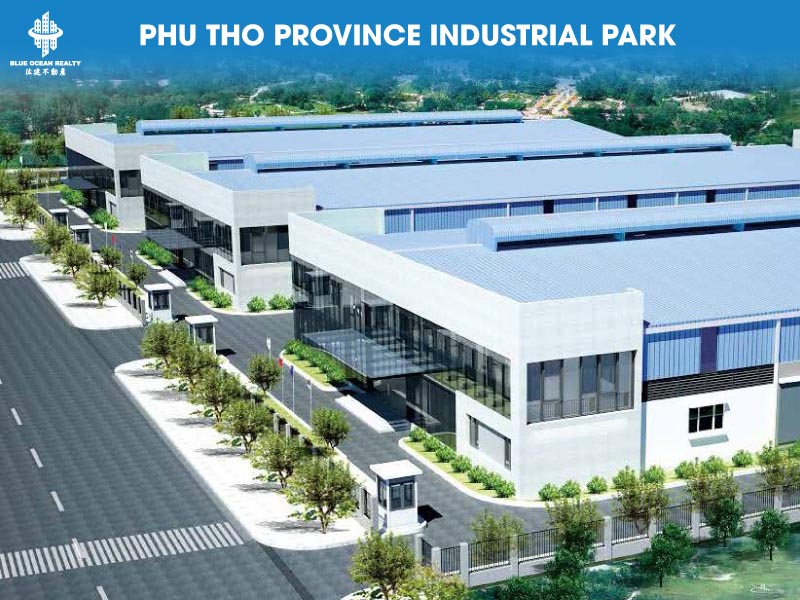
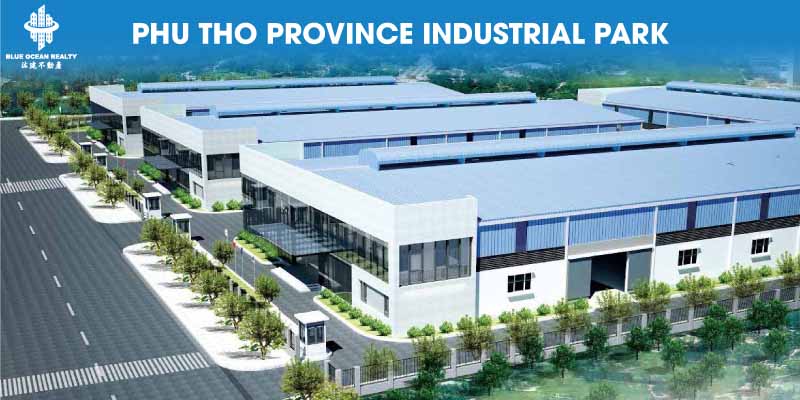
Phu Tho Province Industrial Park. Phu Tho Province serves as the western gateway to Hanoi, connecting the capital with Vietnam’s Northwestern region. Covering an area of approximately 3,533 km², the province is centrally located in the northern mountainous region, at the “confluence of three rivers” where the Red River, Da River, and Lo River meet. Phu Tho is a crucial economic hub, facilitating trade between the Red River Delta and the northern mountainous provinces of Vietnam, as well as Guangxi and Yunnan provinces in China.
Strategically positioned within major transportation corridors, Phu Tho benefits from national highways, the Noi Bai – Lao Cai Expressway, the Ho Chi Minh Highway, and the Trans-Asian Railway. Inland waterways from China and the northwestern provinces also converge in Phu Tho before extending to Hanoi, Hai Phong, and other regions. This geographical advantage provides Phu Tho with favorable conditions for economic development and trade expansion both domestically and internationally.
Geographical Location
Phu Tho Province is bordered by:
- The east: Vinh Phuc Province and Hanoi.
- The west: Son La and Yen Bai Provinces.
- The south: Hoa Binh Province.
- The north: Tuyen Quang Province.
Administrative Divisions
Phu Tho consists of 13 administrative units, including:
- 1 city: Viet Tri City
- 1 town: Phu Tho Town
- 11 districts: Cam Khe, Doan Hung, Ha Hoa, Lam Thao, Phu Ninh, Tam Nong, Tan Son, Thanh Ba, Thanh Son, Thanh Thuy, and Yen Lap, with a total of 225 commune-level administrative units (197 communes, 17 wards, and 11 townships).
Population and Workforce
Phu Tho has a large and abundant labor force. As of 2021, the province’s average population was approximately 1.5075 million, a 1.7% increase from the Previous year, with females accounting for 50.4%. The urban population represented 19.1% of the total. Individuals aged 15 and older constituted 57.5% of the population, up 0.7% from the prior year. The total labor force aged 15 and above working in economic sectors was estimated at 847,200 in 2021, an increase of 4,500 workers from the Previous year. The distribution of labor by sector was as follows:
- Agriculture, forestry, and fisheries: 41.2% (down by 5,800 workers).
- Industry and construction: 31.2% (up by 7,100 workers).
- Services: 27.6% (up by 3,200 workers).
The province prioritizes vocational training and job creation, with 26% of workers in economic sectors having undergone formal training. The employment rate increased by 16,600 new jobs, reaching 110% of the target (a 7% rise compared to 2020). Additionally, 1,160 workers were sent abroad, achieving 46.4% of the plan (equivalent to 66.3% of the 2020 figure).
Healthcare
Phu Tho currently has over 480 medical facilities, including:
- 18 hospitals (1 provincial general hospital, 4 specialized hospitals, 12 district-level general hospitals, and 1 private hospital).
- 13 healthcare centers.
- 277 commune, ward, and township health stations.
The province has nearly 5,900 hospital beds and over 5,900 healthcare personnel, including more than 1,300 doctors. The quality of medical services has steadily improved to meet public demand. The Phu Tho General Hospital is a first-class hospital with a capacity of 1,300 beds, including 800 planned beds and 500 socialized beds. By 2025, the province aims to achieve 50 hospital beds per 10,000 residents, ensure 100% of health stations are reinforced, and promote public-private partnerships in healthcare.
Education and Vocational Training
Phu Tho has a strong education and vocational training system. The province is home to Hung Vuong University, Viet Tri University of Industry, 11 colleges, and various vocational schools that provide training for engineers, technicians, and skilled workers to meet the labor demands of domestic and foreign enterprises. In 2020:
- The rate of trained workers reached 70%, including 54.5% in vocational training.
- The sectoral distribution of trained workers was:
- Agriculture, forestry, and fisheries: 21.8%.
- Industry and construction: 39%.
- Services: 39.2%.
According to the Phu Tho Provincial Party Committee’s Resolution for the 2020-2025 term, the province aims to:
- Create 15,000–16,000 new jobs annually.
- Achieve a labor training rate of 72% by 2025 (with 30% holding certifications or degrees).
- Reduce the poverty rate by an average of 0.4% per year.
- Enhance education quality and workforce training to support industrialization and modernization.
Tourism
Phu Tho is known as the ancestral land of Vietnam, deeply connected with the nation’s history. The province was chosen by the Hung Kings as the founding land of the Van Lang State—the first Vietnamese state.
- On November 24, 2011, Xoan Singing of Phu Tho was recognized by UNESCO as an Intangible Cultural Heritage in Need of Urgent Safeguarding.
- On December 6, 2012, the Worship of Hung Kings was recognized as a UNESCO Intangible Cultural Heritage of Humanity—the first Vietnamese belief system to receive such recognition.
Notable cultural and natural tourist attractions in Phu Tho include:
- Hung Kings Temple Historical Site, Au Co Mother Temple, Hung Lo Communal House, Lau Thuong Communal House, Lang Suong Temple, and Viet Tri Festival City.
- Natural destinations such as Xuan Son National Park, Thanh Thuy Hot Mineral Springs, Ao Chau Lagoon, and Ao Gioi – Suoi Tien.
The province offers various tourism types, including spiritual, cultural-historical, ecological, and sightseeing tourism.
Transportation Infrastructure Development
Phu Tho is a key transportation hub for road, rail, and waterways, facilitating cargo transit between the Northwest, Northeast, and Red River Delta regions. Major transportation routes include:
- Highways: Noi Bai – Lao Cai Expressway, National Highway 2 (AH14), National Highway 32, National Highway 32C, and the Ho Chi Minh Highway.
- Railways: The Trans-Asian Railway runs through Phu Tho, connecting Yunnan (China) with Hanoi and extending to Hai Phong and Ho Chi Minh City. The province has eight railway stations, with Viet Tri and Phu Tho stations being the largest.
- Air Travel: Located 60 km from Noi Bai International Airport, Phu Tho enjoys convenient access to air transportation.
- Waterways: With a total inland waterway length of 235 km, Phu Tho benefits from the convergence of the Red, Lo, and Da Rivers. Viet Tri Port, one of the three largest river ports in northern Vietnam, has an annual capacity of up to 1 million tons. Additionally, an inland customs clearance depot (ICD) is available for import-export services.
Economic Growth and Development Goals
Despite challenges posed by the COVID-19 pandemic, Phu Tho achieved significant economic growth in 2021:
- GRDP reached VND 80.764 trillion, ranking 34th nationwide and 3rd in the Northern Midland and Mountainous region.
- The economic growth rate was 6.28%.
- In 2021, 763 new businesses were registered with a total capital of VND 7.593 trillion, an 8.8% increase in the number of businesses and a 63.9% rise in registered capital compared to the Previous year.
For the 2021–2025 period, Phu Tho targets:
- An average annual GRDP growth of 7.5%.
- A per capita GDP of over VND 65 million by 2025.
- A total social investment of over VND 160 trillion.
(Note: all information above is for reference only. Actual information will be calculated according to the current time)
💠Learn more about us:
—
Your trusted partner in Vietnam Real Estate, Industrial Parks, and Invest Vietnam.
Stay Connected:
- Fanpage: blueoceanrealtyvn
- Youtube: BlueOceanRealty , @batdongsanbor , @blueoceanrealtyvietnam
- Instagram: blueoceanrealtyvn
- Tiktok: @bortintuc
📲 Hotline/ Zalo: +84888089696
—