Quang Tri Industrial Parks – Attracting Investment
Introduction
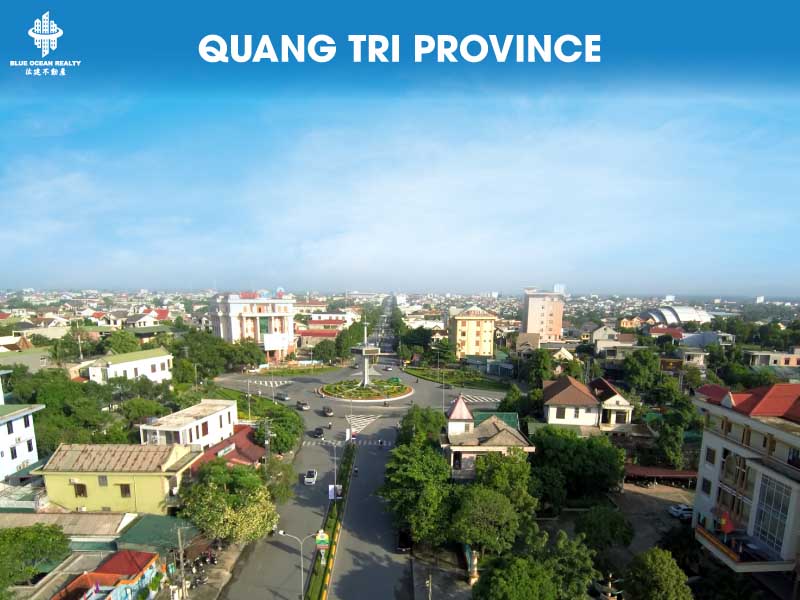
Quang Tri is a province in Central Vietnam, located in the North Central Coast region. It is known for the Ben Hai River – Hien Luong Bridge, the former demarcation line that divided North and South Vietnam for nearly two decades. The province covers a natural area of 4,737.44 square kilometers, accounting for 1.43% of the country’s total area.
Strategically positioned at the eastern end of the East-West Economic Corridor (EWEC), Quang Tri connects Vietnam with Laos, Thailand, and Myanmar via the Lao Bao International Border Gate. This advantageous location allows Quang Tri to become a hub for exchange and cooperation within Vietnam and with countries in the Greater Mekong Subregion (GMS), serving as a gateway to the East Sea for many countries along the corridor.
With outstanding potential and advantages, Quang Tri aims to become the new energy hub of Central Vietnam, focusing on clean energy sources such as wind, solar, and thermal power. The province possesses a rich and diverse range of mineral resources, including large and high-quality reserves of titanium, limestone, and white silica sand. Additionally, the offshore area near Con Co Island contains a large gas reserve, which is expected to be exploited in the near future, opening up opportunities for gas-based processing industries and advanced material production. Quang Tri also leads the country in the output of plantation forest timber.
Tourism and Heritage
Quang Tri has abundant natural and cultural tourism resources. The province is known for its historical war relics, including Hien Luong – Ben Hai, Vinh Moc tunnels, Quang Tri Citadel, Route 9 – Khe Sanh, and the legendary Ho Chi Minh Trail. Notable natural attractions include Tram Tra Loc, Ru Linh primeval forest, Brai Cave, Gio An ancient wells, and pristine beaches like Cua Tung, Cua Viet, and Vinh Thai, known for their white sand, flat terrain, and clear blue waters.
International Cooperation
Quang Tri maintains friendly relations with Savannakhet and Salavan provinces (Laos), Mukdahan (Thailand), and is working to establish cooperation with Ubon Ratchathani (Thailand), Hiroshima (Japan), and Jeollabuk-do (South Korea).
Development Goals
By 2025, Quang Tri aims to be in the upper-middle tier of provincial development and among the relatively advanced provinces in Vietnam by 2030.
Geographical Location
- North: Borders Quang Binh Province
- South: Borders Thua Thien Hue Province
- West: Borders Savannakhet and Salavan Provinces (Laos)
- East: Borders the East Sea
Administrative Units
Quang Tri includes:
1 city: Dong Ha
1 town: Quang Tri
8 districts: Cam Lo, Con Co, Dakrong, Gio Linh, Hai Lang, Huong Hoa, Trieu Phong, Vinh Linh
125 commune-level units: 101 communes, 13 wards, 11 townlets
Population and Labor
As of the end of 2020, the population was 638,627, with 49.7% male and 50.3% female. Urban population accounts for 32.46%. The labor force in 2020 was 367,257, of which 311,263 were of working age. Unemployment rate among working-age people was 1.39%. From 2016 to 2020, the province created 58,815 new jobs, averaging 11,763 per year. Trained labor rate reached 65.88%.
Healthcare and Education
There are 63 medical facilities with 2,025 hospital beds and 2,564 healthcare staff, including 575 doctors. Quang Tri is calling for investment in an international-standard hospital in addition to its provincial general hospital.
In education, the province has a branch of Hue University, 2 colleges, 4 vocational schools, and several vocational training centers. The iSchool Quang Tri International Integration School, opened in 2018, offers modern, globally-aligned education.
Tourism
Key historical sites include Quang Tri Citadel, Hien Luong – Ben Hai, Route 9 – Khe Sanh, the Ho Chi Minh Trail, Vinh Moc tunnels, Ta Con Airport, McNamara Line, Lao Bao prison, and Con Co Island. Notable landscapes include Tram Tra Loc, Ru Linh Forest, Brai Cave, Mui Treo – Ru Bau, and beaches like Cua Tung, Cua Viet, and Vinh Thai. Quang Tri is part of popular tourism routes such as the Central Heritage Road and the Legendary Route.
Transport Infrastructure
Quang Tri enjoys strong transport links by road, rail, and water. All communes are accessible year-round by road. Key national highways intersect the province, including National Route 1A, the Ho Chi Minh Road (East and West branches), and National Route 9 connecting to Laos, Thailand, and Myanmar. Other routes include National Routes 15D and 15A, the Cam Lo – La Son Expressway (under construction), and the North-South Railway. The province is near Dong Hoi Airport (90 km north) and Phu Bai International Airport (80 km south).
Cua Viet Port (Gio Linh District) handles 5,000-ton vessels and general cargo. The My Thuy Deep-water Port (under development) will accommodate vessels up to 100,000 tons.
Utilities Infrastructure
- Electricity: The province has expanded its power infrastructure significantly, aiming to become an energy center for the region and the country. From 100.9 MW in 2015, total generation capacity rose to 377 MW by 2020, including 167.5 MW hydropower, 60 MW wind, and 149.5 MW solar. The grid has been expanded to cover 100% of villages and 99.5% of households.
- Water Supply: The water supply system has grown to support urban and industrial areas, with annual capacity reaching 13 million m³. Clean water coverage reaches 95% of urban residents and 94.5% of rural residents.
- Telecommunications: IT infrastructure is well-developed. All state agencies use electronic document management, email systems, and e-government portals. The provincial public service portal offers 2,074 online services across four levels.
Economic Performance in 2021
Despite the COVID-19 pandemic, Quang Tri’s economy grew steadily:
Gross regional domestic product (GRDP) reached VND 21,202 billion (2010 prices), up 6.5% from 2020
Per capita GRDP: VND 57.5 million
State budget revenue: VND 5,511.4 billion (159.8% of local estimate, 192.6% of central estimate)
63 out of 101 communes recognized as new rural standard
Industrial production index increased by 9.68%
Total retail and service revenue reached VND 32,491.72 billion, up 4.83%
Total import-export turnover: USD 640.9 million, up 246.4%
67 new investment projects approved, with total registered capital of VND 71,828.37 billion (10x higher than 2020)
3 new FDI projects registered USD 2.409 billion
455 new businesses established
Total investment capital implemented: VND 28,676 billion, up 50.67% from 2020
Goals for 2022
Economic growth: 6.5–7%
State budget revenue: VND 4,150 billion
Trained labor rate: 70.27%
Poverty reduction: 1–1.5%
Focus will be on accelerating energy and industrial projects, restructuring key service sectors, and implementing high-impact, interconnected infrastructure developments.
Quang Tri Industrial Parks – Attracting Investment
Quang Tri has great potential to become a center for manufacturing, logistics, services, and international trade, particularly with Cambodia, Laos, and northeastern Thailand. Its central location within a vast inland region allows access to supply chains with ASEAN, Northeast Asia, China, and India.
The province is investing in energy industries. By 2030, Quang Tri aims to become the energy hub of Central Vietnam, with thermal and gas power in the East and the country’s largest wind power field in the West, converting Lao wind into electricity.
Key Industrial Zones and Economic Zones
Quang Tri has 2 economic zones (EZs) and 5 industrial zones (IZs), included in Vietnam’s national development plans:
- Lao Bao Special Economic – Trade Zone (established 1998)
- Southeast Quang Tri Economic Zone (coastal EZ, established 2015)
- Quan Ngang Industrial Zone
- Nam Dong Ha Industrial Zone
- Northwest Ho Xa Industrial Zone
- Quang Tri Industrial Zone
- Trieu Phu Industrial Zone
17 industrial clusters
These zones are being expanded and upgraded to attract investment and accommodate projects. By the end of 2020, Quang Tri had around 4,000 businesses with registered capital totaling nearly VND 44,828 billion, creating jobs for approximately 44,000 workers.
Infrastructure and Future Orientation
The province continues to invest in essential infrastructure in Southeast Quang Tri EZ, Quan Ngang IZ, Northwest Ho Xa IZ, and other clusters. The province is also preparing La Lay International Border Gate for EZ designation. Key initiatives include:
Quang Tri Industrial Zone Infrastructure Project (VSIP8)
Waste treatment projects via private capital
Water supply systems for urban areas, industrial parks, economic zones, and tourism zones
Industrial Development Goals
By 2030:
- Industry to account for over 25% of GRDP
- Manufacturing and processing to account for around 18%
- Industrial value-added growth: >14%/year
- Industrial labor productivity growth: >9%/year
- Industrial labor share: >10%
By 2045:
- Quang Tri is projected to become a province with a fundamentally advanced industrial sector.
Learn more about us:
—
Your trusted partner in Vietnam Real Estate, Industrial Parks, and Invest Vietnam.
Stay Connected:
- Fanpage: blueoceanrealtyvn
- Youtube: BlueOceanRealty , @batdongsanbor , @blueoceanrealtyvietnam
- Instagram: blueoceanrealtyvn
- Tiktok: @bortintuc
Hotline/ Zalo: +84888089696
—