Ba Ria – Vung Tau Province Industrial Zones Attract Investment
Ba Ria – Vung Tau (BR-VT) is a province in the Southeastern region of Vietnam, possessing many advantages in geographical location, abundant natural resources, strong tourism potential, and increasingly complete transport infrastructure. It is the only locality in the Southeast with a 305 km long coastline, a continental shelf of 100,000 km², rich marine resources, and the largest oil and gas reserves in the country.
Thanks to these favorable conditions, Ba Ria – Vung Tau is considered one of the three key growth poles of the Southern Key Economic Zone, acting as the gateway to the sea for southern provinces. The province benefits from a modern seaport system, proximity to Long Thanh International Airport under construction, a relatively complete road network, and major regional connectivity projects such as the Bien Hoa – Vung Tau Expressway, Ho Chi Minh City Ring Road 4, the Cai Mep – Thi Vai inter-port traffic system, and the railway connecting the province to domestic and international markets.
The province has a natural area of 1,982.56 km², accounting for 5.99% of the country’s total area, ranking 50th among 63 provinces and centrally-run cities. In 2020, the average population was 1,167,938 people, representing 1.2% of the national population and ranking 39th in the country.
Development of Logistics Center
Although not large in size, Ba Ria – Vung Tau makes significant contributions to Vietnam’s GDP and state budget revenue, contributing 32% of national GDP and 44.7% of state budget revenue. It is also the country’s largest goods production hub, accounting for 45% of total cargo and more than 60% of container volume through Vietnam’s seaport system.
The province has all the conditions to develop into an international logistics and transshipment hub, thanks to its location on the international maritime route from Europe and the Middle East through North Asia and America. Alongside seaports, logistics services have developed strongly. In addition to inland waterways, more than 20 logistics warehouse projects are operational, covering 224 ha. The detailed zoning plan (1/2000 scale) for Cai Mep Ha Logistics Center (total area: 2,204 ha) has been completed, serving as the legal basis for selecting capable investors to integrate BR-VT into the global supply chain.
Ba Ria – Vung Tau also holds advantages in oil and gas, tourism, seaports, and industrial development.
Geographic Location
- East: Binh Thuan Province
- West: Ho Chi Minh City
- South: East Sea
- North: Dong Nai Province
Administrative Units
The province has 8 district-level administrative units, including 2 cities, 1 town, and 5 districts with 82 commune-level units (29 wards, 6 townships, 47 communes).
Cities: Vung Tau City, Ba Ria City
Town: Phu My
Districts: Chau Duc, Xuyen Moc, Dat Do, Con Dao, Long Dien
Population
In 2022, Ba Ria – Vung Tau had 1,337,700 people, with a population density of 674 people/km². The quality of life has improved significantly, with an average life expectancy of 76.4 years (higher than the national average of 73.6 years). The province aims to increase life expectancy to 78 years by 2025 and 80 years by 2030.
According to the General Statistics Office, 28 ethnic groups and foreign residents live in the province. The Kinh are the majority, followed by Hoa, Cho Ro, Khmer, Tay, Nung, Muong, Thai, and others.
Labor force: 589,192 people aged 15 and above.
Education
With the principle “education and training are top national policies,” BR-VT focuses heavily on developing high-quality human resources.
General education: 505 schools, including 31 high schools, 92 secondary schools, 184 primary schools, and 198 kindergartens.
Higher education: Ba Ria – Vung Tau University offers 48 majors/specialties.
Healthcare
The healthcare system has been upgraded at all three levels.
Provincial level: 13 facilities, including 2 general hospitals, 4 specialized hospitals, and 7 provincial medical centers.
District level: 8 district medical centers.
Commune level: 82 commune health stations.
Tourism
With its strategic location and natural resources, BR-VT defines tourism as a key economic sector. The province has more than 50 mountains and hills extending to the sea, ideal for beaches and resorts. From Vung Tau to Xuyen Moc, numerous tourism projects have attracted millions of visitors.
BR-VT has over 1,100 accommodation establishments, including 457 classified from standard to 5-star with 12,897 rooms.
Transport Infrastructure
BR-VT has modern and synchronized transport infrastructure:
Seaports: Cai Mep International Terminal is one of only 19 global ports capable of receiving the largest container ships, with direct routes to Europe and America. The province has 50 operational ports with a designed capacity of 150 million tons/year and 8 major container terminals (8.3 million TEUs/year).
Airports: Con Dao Airport (flights to Ho Chi Minh City, Can Tho, Hanoi, Vinh, Hai Phong); Vung Tau Airport (oil and gas services, weekend flights). Future plans: relocate Vung Tau Airport to Go Gang and build Dat Do Airport.
Roads: Connected via National Highways 51, 55, 56, and upcoming highways (Ben Luc – Long Thanh – Dau Giay, Bien Hoa – Vung Tau, Ring Road 4, Phuoc An Bridge). Road network length: 4,380 km.
Waterways: Connected to international maritime routes, inland waterways linked to HCMC and the Mekong Delta, high-speed ferries to Con Dao.
Economy
In 2022, GRDP grew 7.15%, industrial production (excluding oil and gas) grew 6.61%, retail increased 12.39%, and tourism services doubled.
GRDP in 2022: VND 390,293 billion (USD 16.5 billion), per capita: USD 13,988.
Industrial Development
By 2022, the province had 442 FDI projects with registered capital of USD 29.9 billion, including 270 projects in industrial zones (USD 12.23 billion). Major projects: Southern Petrochemical Complex (USD 5.4 billion), Hyosung PP plant and LPG storage (USD 1.3 billion).
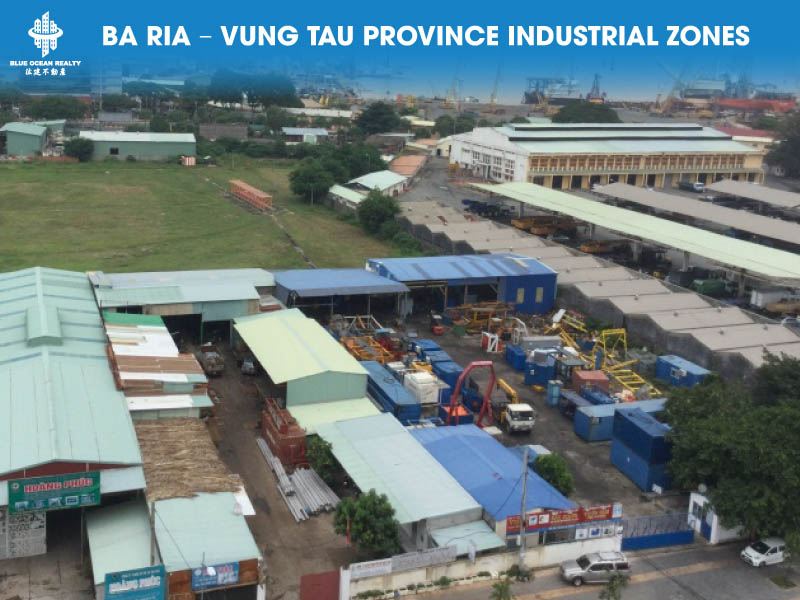
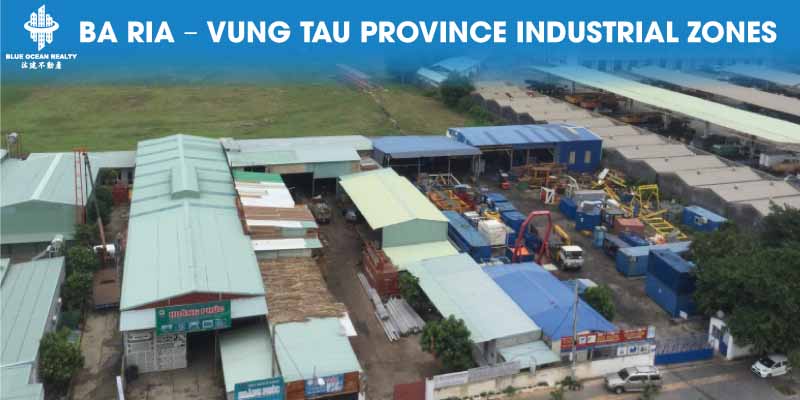
Ba Ria – Vung Tau Province Industrial Zones
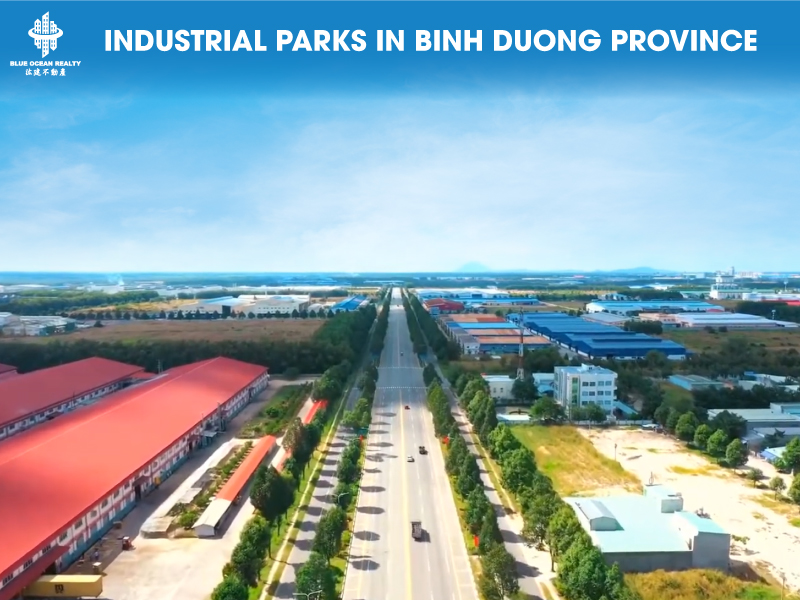
Ba Ria – Vung Tau has 15 industrial zones (8,492 ha), including 13 operational (7,242 ha) and 2 under development (1,250 ha). Occupancy rate: 57.07% overall, 67.84% for operational zones.
Key industrial zones: Long Son, Hoa Long, Sonadezi Chau Duc, Phu My I, II, III, My Xuan A & A2, My Xuan B1 (Conac, Tien Hung, Dai Duong), Cai Mep, Dong Xuyen, Dat Do 1, Long Huong, Da Bac, Long Son Petrochemical Complex.
The province also plans 17 industrial clusters (552.65 ha), with 6 already operational at a 65.36% occupancy rate.
Development Goals
By 2025: Achieve 45% local supply rate for medical equipment and electronics industries, 65% for textile and footwear industries, and develop high-tech supporting materials.
By 2030: Become a centrally governed city, a national logistics hub, and an international tourism destination. Target GRDP per capita (excluding oil & gas): USD 18,000–18,500.
By 2050: Become Vietnam’s national maritime economic center, Southeast Asia’s maritime services hub, and a world-class tourism and industrial center.
Learn more about us:
—
Your trusted partner in Vietnam Real Estate, Industrial Parks, and Invest Vietnam.
Stay Connected:
- Fanpage: blueoceanrealtyvn
- Youtube: BlueOceanRealty , @batdongsanbor , @blueoceanrealtyvietnam
- Instagram: blueoceanrealtyvn
- Tiktok: @bortintuc
Hotline/ Zalo: +84888089696
—