Tay Ninh Province Industrial Parks Attract Investment
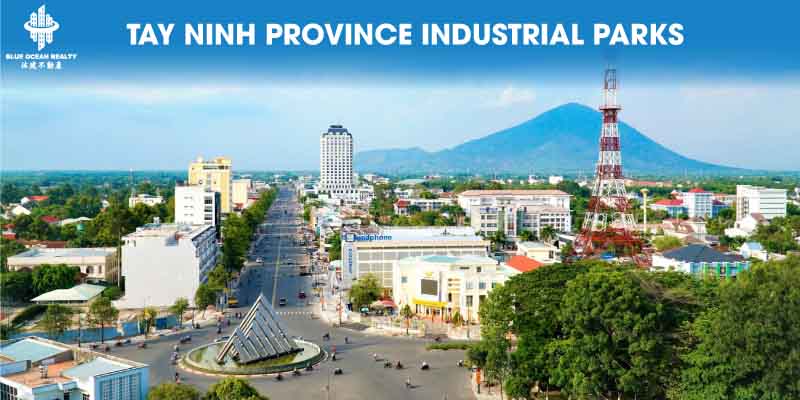
Tay Ninh Province, located in the Southeastern region of the Socialist Republic of Vietnam, serves as a transitional area from the Central Highlands down to the Mekong Delta. The province has a natural area of 4,035.45 km².
Tay Ninh possesses abundant and dynamic resources and is entering a “golden period” for socio-economic development, with human resources and culture being core factors in local policy.
As a locality within the Southern Key Economic Region, Tay Ninh enjoys advantages in industry, agriculture, tourism, and services.
Tay Ninh is a border province with 03 international border gates (Moc Bai, Xa Mat, Tan Nam), 03 national border gates (Ka Tum, Chang Riec, Phuoc Tan), and 10 auxiliary gates. It is an important trading hub connecting Vietnam with ASEAN countries in the Greater Mekong Subregion and other international economic corridors via the Trans-Asia Highway. Moreover, Tay Ninh has great potential to attract investment flows shifting from Binh Duong, Dong Nai, and other Southeastern provinces, creating opportunities for industrial as well as broader socio-economic development.
Inter-Regional Connectivity in Transport Infrastructure
Tay Ninh has proactively strengthened inter-regional connectivity, developed transport infrastructure, expanded industrial parks, reformed administration, and improved the investment environment. These efforts aim to attract businesses and investors, thereby unlocking socio-economic development potential.
In 2022, Tay Ninh ranked 15th among 63 provinces and cities nationwide in foreign investment attraction.
- In the first 10 months of 2023, Tay Ninh maintained positive growth in trade and services:
- Retail sales of goods: +11.32%
- Accommodation, food, tourism, and other services: +12.14%
- Transport, warehousing, and logistics: +25.98%
Agricultural production remained stable, with large-scale livestock projects being implemented. Industrial production showed stronger growth toward the end of the year, with the industrial production index increasing by 8.27% over 10 months, though still below target.
Tay Ninh is deepening inter-regional linkages, driving fast and sustainable socio-economic development, especially following Politburo Resolution No. 24-NQ/TW on socio-economic development, national defense, and security in the Southeast region to 2030 with a vision to 2045.
Geographic Location
- Tay Ninh is part of the Southern Key Economic Region and plays a vital role as a western gateway of Vietnam. It is strategically important for national defense, trade, and transshipment of goods, services, commerce, and tourism.
- West and North: borders Cambodia, with a 240 km-long borderline, 2 international gates (Moc Bai, Xa Mat), 4 main gates, and 10 auxiliary gates.
- East: borders Binh Duong and Binh Phuoc provinces.
- South: borders Ho Chi Minh City and Long An Province.
Administrative Units
Tay Ninh has 9 district-level administrative units: 1 city, 2 towns, and 6 districts, including 94 commune-level units (17 wards, 6 townships, and 71 communes).
City: Tay Ninh
Towns: Hoa Thanh, Trang Bang
Districts: Ben Cau, Chau Thanh, Duong Minh Chau, Go Dau, Tan Bien, Tan Chau
Population and Labor
According to the General Statistics Office, Tay Ninh has 29 ethnic groups and 9 religions, with Caodaism being the most prominent.
Each year, about 25,000 workers receive career counseling and vocational training, with over 10,000 students enrolled in local vocational schools.
A large proportion of the population is of working age, providing an abundant and skilled labor force. This supports both labor-intensive industries (textiles, agricultural processing) and higher value-added industries, enhancing product competitiveness.
Education
The province has nearly 410 general schools (31 high schools, 106 secondary schools, 271 primary schools, and 1 gifted school), along with 116 kindergartens.
Vocational and higher education includes 1 college, 3 vocational schools, 2 professional secondary schools, 1 continuing education center, and partnerships with universities. About 51% of the workforce has received vocational or formal training.
Healthcare
The provincial healthcare system consists of a general hospital, public and private hospitals, district-level medical centers, and 100% commune-level health stations. There are 2,052 medical staff, 2,326 hospital beds, and increasingly modern equipment.
Tourism
Tay Ninh connects Ho Chi Minh City with major Cambodian tourist sites (170 km to Phnom Penh via Moc Bai, 400 km to Siem Reap via Xa Mat).
The province has strong potential for tourism development (eco-tourism, spiritual tourism, cultural tourism, and leisure). Major attractions include:
Ba Den Mountain Historical-Cultural Site
Central Office for South Vietnam Special National Relic Site
Dau Tieng Lake
Cao Dai Holy See
Tourism infrastructure is still developing, creating great opportunities for investors.
Transport Infrastructure
- Roads: The Trans-Asia Highway runs 28 km through Tay Ninh, connecting Ho Chi Minh City to Cambodia via Moc Bai. National Highway 22B links HCMC to Xa Mat border gate.
- Railways: A planned railway will connect HCMC to Moc Bai and Xa Mat.
- Airways: The former Trang Lon military airfield may be upgraded to a civil airport (1,000 m runway), while Ba Den Mountain could host a helicopter landing site for tourism.
- Waterways: Tay Ninh has two main rivers (Saigon River, Vam Co Dong River) with 18 planned ports, including Ben Keo Port (3.8 million tons/year) and Go Dau Port (1.7 million tons/year).
Economy in 2022
Despite challenges, Tay Ninh achieved:
- GRDP growth: 9.56% (16th nationwide, 1st in the Southern Key Economic Region).
- Budget revenue: VND 12,101 billion (+16.59%).
- Industrial production index: +15.51% (highest in 3 years).
- New enterprises: 758 companies, capital VND 16,284 billion, +100% compared to 2021.
- FDI attraction: USD 712.6 million, total 352 FDI projects with registered capital of USD 9 billion.
- Retail sales: VND 76,434 billion (+22.79%).
- Tourism revenue: VND 20,518 billion (+36.58%).
Economic Results in 2023
- GRDP: VND 59,235 billion (+5.5%).
- Industrial production index: +8.9% (lower than 15% target).
- FDI: 397 projects (USD 9.24 billion).
- Total investment capital: VND 40,755 billion (+10.1%).
- Tourism: 5.1 million visitors, VND 2,000 billion revenue.
- Budget revenue: achieved 100% of target.
- Disbursement: ranked 10th nationwide (95.33%).
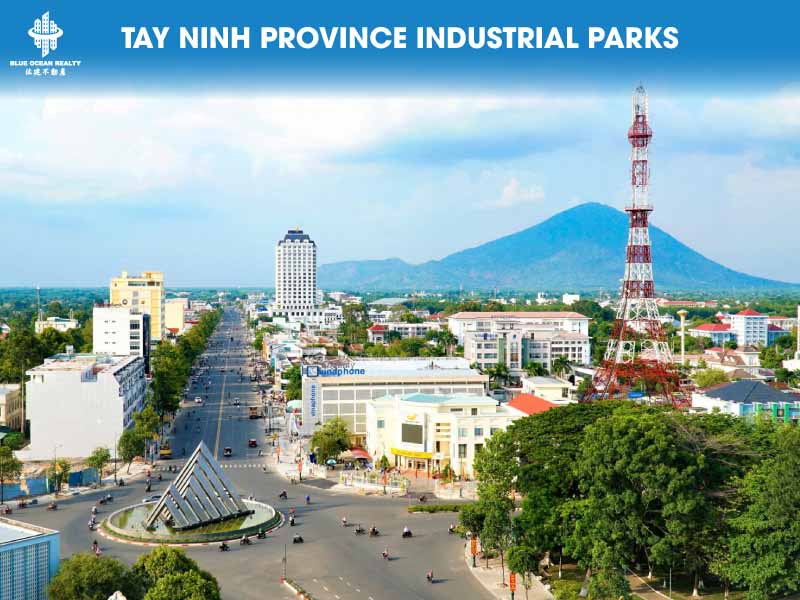
Tay Ninh Province Industrial Parks
- Currently, Tay Ninh has 6 approved industrial parks and 1 in Moc Bai Border Gate Economic Zone, with a total planned area of 4,067.11 ha.
- 6 operational industrial parks: 3,493.3 ha approved, 2,616.61 ha leasable, 1,721.27 ha leased (65.78% occupancy).
- As of March 31, 2023: 378 valid projects (281 FDI, 97 domestic), with total registered capital of USD 8.4 billion and VND 21,298 billion, employing 134,224 workers.
- Industrial parks play a key role in economic restructuring, boosting growth, generating tax revenue, improving infrastructure, and creating jobs.
Vision to 2050
Tay Ninh still has over 300 ha of clean land for investment. The province has submitted proposals for 2 new industrial parks and 1 expansion, covering 3,944 ha, for the 2021–2030 period with a vision to 2050.
With abundant land, improved infrastructure, and favorable investment policies, Tay Ninh offers attractive conditions for domestic and foreign investors.
Learn more about us:
—
Your trusted partner in Vietnam Real Estate, Industrial Parks, and Invest Vietnam.
Stay Connected:
- Fanpage: blueoceanrealtyvn
- Youtube: BlueOceanRealty , @batdongsanbor , @blueoceanrealtyvietnam
- Instagram: blueoceanrealtyvn
- Tiktok: @bortintuc
Hotline/ Zalo: +84888089696
—