Can Tho City Industrial Park develops to attract investment
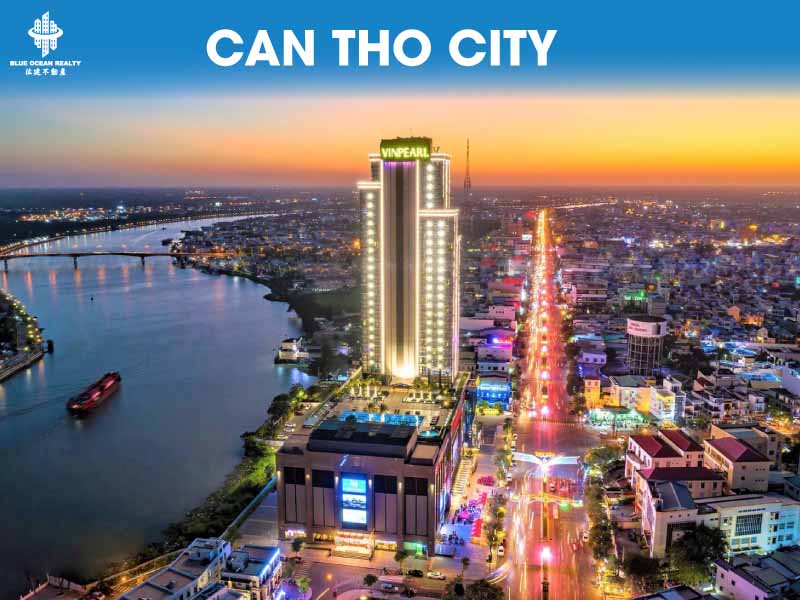
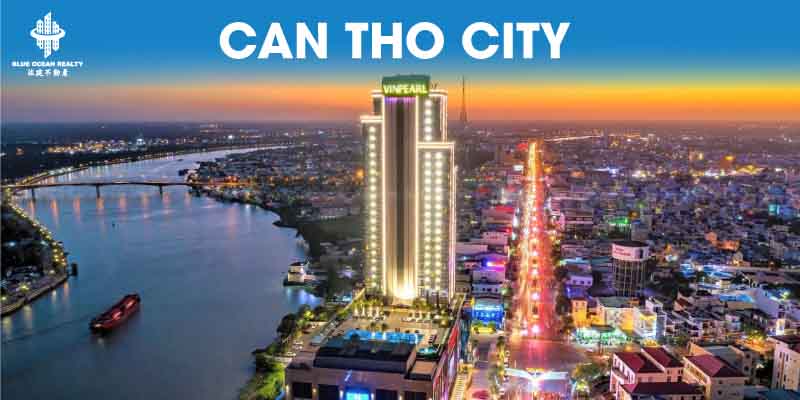
Can Tho is one of the five centrally governed municipalities of Vietnam. It is the most dynamic and developed city in the Mekong Delta region, serving as the economic, cultural, social, medical, educational, and commercial hub of the entire area. Can Tho is classified as a class-I city, a regional and national-level central city. Originally established as a regional nucleus during the French colonial period, Can Tho continues to be the economic center of the Mekong Delta.
Can Tho is a relatively young city compared to other major cities in Vietnam. At the 4th session of the 11th National Assembly, Resolution No. 22/2003/QH dated November 26, 2003—and Government Decree No. 05 issued on January 2, 2004—elevated Can Tho Province to Can Tho City under the central government. On June 24, 2009, the government issued Decision No. 889-QD/TTg officially recognizing Can Tho as a class-I city directly under central authority.
Can Tho is an important gateway for road, river, sea, and air transport. The city lies at the heart of the lower Mekong Delta, stretching over 65 km along the west bank of the Hau River, covering a natural area of 1,401 km². It has strategic economic and military significance for the region, functioning as the inland transport hub of the Mekong Delta and the nation. The city hosts an international port and an airport which is being expanded into an international aviation hub. The iconic Can Tho Bridge is operational, and historic architecture includes landmarks such as Ninh Kieu Wharf, the Old Market, and the State Bank building.
Over the past 20 years, Can Tho has prioritized socioeconomic infrastructure development as a foundation for rapid and sustainable growth. Leveraging both state and non-state funding, the city has gradually completed key infrastructure systems, positioning itself as a centrally governed municipality and a regional economic focal point.
The central government has identified Can Tho as a key growth engine of the Mekong Delta. Annually, Can Tho contributes approximately 1.2% to the national GDP and about 9.5% to the regional GRDP. Its economic capacity has improved significantly across multiple sectors, including commerce, tourism, science and technology, healthcare, education, and transportation, affirming its central role in the Mekong Delta.
GEOGRAPHICAL LOCATION
Can Tho is located in the downstream region of the Mekong River and in the central area of the Mekong Delta Economic Zone. The city stretches over 60 km along the west bank of the Hau River and has the following geographic borders:
- To the east: Dong Thap and Vinh Long provinces
- To the west: Kien Giang province
- To the south: Hau Giang province
- To the north: An Giang province
ADMINISTRATIVE STRUCTURE
Can Tho City consists of 9 district-level administrative units, including 5 urban districts and 4 rural districts, with a total of 83 commune-level units (5 townlets, 42 wards, and 36 communes), divided into 630 zones, hamlets, and quarters. Specifically:
- 5 Urban Districts:
- Binh Thuy (8 wards)
- Cai Rang (7 wards)
- Ninh Kieu (11 wards)
- O Mon (7 wards)
- Thot Not (9 wards)
4 Rural Districts:
- Co Do (1 townlet, 9 communes)
- Phong Dien (1 townlet, 6 communes)
- Thoi Lai (1 townlet, 12 communes)
- Vinh Thanh (2 townlets, 9 communes)
POPULATION
According to statistical data, Can Tho has a permanent population of approximately 1,297,260 people. As of November 30, 2023, the number of newborns was 14,902 (7,659 male and 7,243 female), with a sex ratio at birth of 105.7 boys per 100 girls.
In 2024, the city’s population strategy continues to shift focus from family planning to population and development. Efforts are being made to maintain population size at replacement level, improve population quality, and ensure a naturally balanced sex ratio at birth.
EDUCATION
In the 2023–2024 academic year, Can Tho has 467 educational institutions, all of which have internet access with adequate speed to support administrative and teaching activities.
The city is home to 7 universities:
- Can Tho University
- Can Tho University of Medicine and Pharmacy
- Can Tho University of Technology
- Ho Chi Minh City University of Architecture – Can Tho Campus
- Nam Can Tho University
- FPT University – Can Tho
- Tay Do University
There are also 10 colleges across the city, with 4 located in Ninh Kieu District, 1 in O Mon District, and the rest in Binh Thuy District.
TRANSPORTATION INFRASTRUCTURE
In recent years, Can Tho has mobilized diverse sources of capital to maximize investment in infrastructure development. This has rapidly transformed the city’s appearance, increased private sector investment, and promoted socialization in developing socioeconomic infrastructure—especially in transportation systems, airports, ports, cultural and sports facilities, healthcare, education, and rural development. These improvements have enhanced connectivity within the Mekong Delta, as well as to Ho Chi Minh City and other regions nationwide.
Can Tho boasts a rich technical-economic infrastructure system, with road and expressway networks being completed. Major infrastructure projects now in operation include:
- Can Tho Bridge
- Can Tho International Airport
- Phase 1 of the deep-water shipping channel for large vessels entering the Hau River
- Cai Cui Port
- Upgraded Can Tho Port – Hoang Dieu Wharf Area
- Nam Song Hau Road
- These projects reinforce Can Tho’s role as a vital transportation hub for both regional and international logistics.
From 2021 to 2025 and beyond, the government and Ministry of Transport will continue prioritizing key projects including:
- My Thuan – Can Tho Expressway and My Thuan 2 Bridge
- Eastern North-South Expressway (Can Tho – Hau Giang segment)
- Expansion of Nam Song Hau Road (from Can Tho Bridge junction to Cai Cui Port)
- Phase 2 of the Cho Gao Canal upgrade
- Phase 2 of the deep-water shipping channel for large vessels entering the Hau River
- Upgrade of Can Tho International Airport
- Ho Chi Minh City – Can Tho Railway
RAILWAY
Can Tho currently has two railway projects under planning:
- Ho Chi Minh City – Can Tho High-Speed Railway: 139 km in length, with standard 1,435 mm double-track gauge and 10 stations. It starts at Tan Kien Station (Binh Chanh District, Ho Chi Minh City) and ends at Cai Rang Station (Cai Rang District, Can Tho City).
- Can Tho Urban Railway: A planned network with a total length of 38.8 km, passing through O Mon, Binh Thuy, Ninh Kieu, and Cai Rang Districts. It includes one elevated line that splits into two branches—one toward Cai Cui Port and the other toward the junction of National Highways 1 and 61.
- At present, no railway lines are operational or under construction.
ROAD NETWORK
Can Tho has a total of 2,762.84 km of roadways, including:
- 123.715 km of national highways
- 183.85 km of provincial roads
- 332.87 km of district roads
- 153.33 km of urban roads
- 1,969.074 km of commune and hamlet roads
Its inland waterway network spans 1,157 km, of which 619 km can accommodate vessels with a payload of 30 tons or more. District-level waterways comprise 40 routes with a total length of 405.05 km, suitable for vessels between 15 and 60 tons.
Key national highways that connect Can Tho with other Mekong Delta centers include:
- National Highways 1, 91, 91B, 91C (Nam Song Hau), 61C, and 80
- Future plans involve upgrading and expanding National Highway 80, National Highway 91C (Nam Song Hau), Long Xuyen Bypass (Thot Not – Lo Te section), and National Highway 91 (Km0 – Km7 segment).
AIR TRANSPORT
Can Tho International Airport is the largest airport in the Mekong Delta. It officially began domestic commercial operations on January 3, 2009, and launched international flights at the end of 2010.
WATERWAYS
Can Tho is recognized as a riverine city, with a dense canal network, vast orchards and rice paddies, and culturally significant landmarks like Ninh Kieu Wharf and the Cai Rang Floating Market—a unique feature of Southern Vietnamese culture.
SEAPORTS
Can Tho’s port system is undergoing major upgrades:
- Can Tho Port can receive vessels with capacities between 10,000 and 20,000 DWT
- Tra Noc Port includes three large warehouses with a capacity of 40,000 tons and handles up to 200,000 tons of cargo per year; it can receive 2,500 DWT vessels
- Cai Cui Port is a newly built facility capable of accommodating 10,000–20,000 DWT vessels, with a throughput of 4.2 million tons per year
CAN THO’S ECONOMIC DEVELOPMENT IN 2023
In 2023, Can Tho experienced a positive economic and social recovery. Although some major targets were not fully achieved, the city recorded significant improvements. Trade promotion activities were enhanced, tourism flourished, and the business and investment environment continued to improve. Key achievements include:
- Economic scale: The city’s economy reached approximately VND 118,491 billion, ranking 4th among centrally governed cities and 6th among the 13 provinces and cities in the Mekong Delta.
- GRDP growth: Gross Regional Domestic Product (GRDP) grew by 5.75% compared to 2022, with growth across all sectors:
- Agriculture, forestry, and fisheries: +3.22%
- Industry and construction: +3.78%
- Services: +7.57%
- Product taxes: +4.50%
GRDP per capita: Estimated at VND 94.12 million per person
- Economic structure:
- Agriculture–forestry–fisheries: 9.79%
- Industry–construction: 30.28%
- Services: 53.33%
Industrial production index: Increased by 4.66% year-on-year
- Retail sales and consumer services revenue: Over VND 177,443 billion, achieving more than 93% of the target
- Tourism: Rapid recovery with over 5.9 million visitors and total tourism revenue of VND 5,420 billion, up 32% from 2022
- State budget revenue: More than VND 11,138 billion, exceeding the assigned target by 0.9%
- Local budget expenditure: More than VND 14,973 billion, exceeding the Ministry of Finance’s target by 0.24%, and reaching 88.59% of the City People’s Council’s projection
- Total social investment: Estimated at VND 31,290 billion
- State budget: VND 12,166 billion
- Non-state sources: VND 17,456 billion
- Foreign direct investment (FDI): VND 1,669 billion
Public investment disbursement: Over VND 7,782 billion, completing more than 95% of the annual plan
- Major projects launched include:
- Chau Doc – Can Tho – Soc Trang Expressway
- VSIP Industrial Park
- Gas-to-power project chain: Block B – O Mon
2024 DEVELOPMENT GOALS AND KEY INDICATORS
As the fourth year of the 2021–2025 socioeconomic development plan, 2024 is pivotal for breakthroughs. Can Tho aims to accelerate economic restructuring tied to innovation and technological advancement. Focus areas include digital economy, green economy, and circular economy. Specific goals:
- GRDP growth target: 7.5–8%
- Total social investment: VND 35 trillion
- State budget revenue: Achieve or surpass centrally assigned target
- Labor productivity value: VND 219–228 million per worker
- Labor productivity growth: 11–15%
DEVELOPMENT VISION TO 2030 AND OUTLOOK TO 2050
By 2030, Can Tho aims to become the growth nucleus of the Mekong Delta—a green, modern, civilized eco-city with strong Tây Đô cultural identity. It aspires to be a regional center for urban services, commerce, tourism, logistics, food processing industry, high-tech agriculture, education, specialized healthcare, science & technology, culture, and sports. The city will feature climate-resilient, integrated infrastructure ensuring seamless regional and international connectivity.
By 2050, Can Tho will evolve into a modern, livable smart eco-city, deeply rooted in the riverine culture of the Mekong Delta, ranking among the well-developed cities in Asia.
Can Tho City Industrial Park develops to attract investment
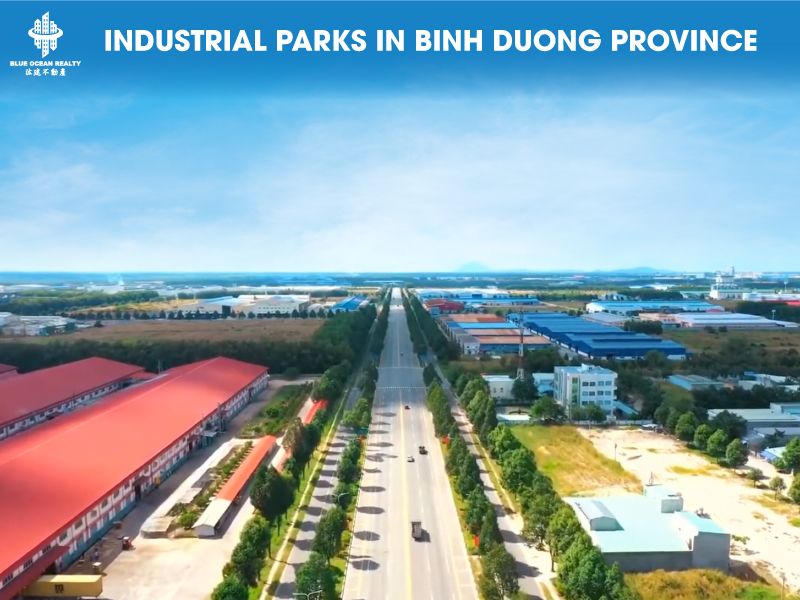
As of 2023, Can Tho City has planned eight industrial parks (IPs) with a total area of approximately 2,260.3 hectares. Of these, seven IPs have been officially established, covering over 987 hectares, including:
- Tra Noc 1 Industrial Park (135 ha)
- Tra Noc 2 Industrial Park (155 ha)
- Hung Phu 1 Industrial Park (262 ha)
- Hung Phu 2 Industrial Park (67 ha)
- Thot Not Industrial Park (74.87 ha)
- Vinh Thanh Industrial Park – Phase 1 (293.7 ha)
To date, these IPs have attracted 258 investment projects, occupying 342.82 ha of industrial land, with a total registered capital of USD 1.884 billion and implemented capital of USD 1.136 billion (about 60% of the total registered).
By 2030, the city plans to establish seven additional industrial parks with a combined area of over 6,485 hectares (an increase of 6.5 times compared to the current area), including:
- Vinh Thanh IP – Phase 2 (over 606 ha)
- Vinh Thanh 2 IP (519 ha)
- Vinh Thanh 3 IP (675.45 ha)
- Vinh Thanh 4 IP (815 ha)
- Vinh Thanh 5 IP (2,550 ha)
- Co Do – Thoi Lai IP (1,070 ha)
- O Mon High-Tech Industrial Park (250 ha)
In addition, Can Tho will continue to research and attract investment in supporting industrial clusters, such as:
- Binh Thuy Supporting Industrial Cluster (75 ha)
- Thoi Lai Supporting Industrial Cluster (75 ha)
- Co Do Supporting Industrial Cluster (75 ha)
- Vinh Thanh Supporting Industrial Cluster (75 ha)
SCIENCE AND TECHNOLOGY DEVELOPMENT
Alongside industrial expansion, Can Tho is also investing in functional zones, such as high-tech agricultural areas, research and training centers—supporting agricultural restructuring toward value-added and sustainable development. By 2030, high-tech agricultural zones are expected to cover approximately 1,700 hectares.
To become a regional science and technology hub, the city has prioritized building modern, synchronized S&T infrastructure and developing highly skilled human resources. Can Tho’s S&T potential and technical infrastructure for industrialization and modernization are continually improving.
The City Center for Science and Technology Application plays a key role in researching and applying advanced technologies in production and daily life—enhancing the technological content of core products.
The Vietnam–Korea Industrial Technology Incubator supports startup incubation and tech development for businesses in agriculture, aquaculture, and mechanics. Meanwhile, the Center for Technical Standards, Measurement and Quality provides testing, inspection, calibration, evaluation, and certification services—serving as a top institution in the region.
STRATEGIC DIRECTIONS FOR THE FUTURE
To fulfill its role as a centrally governed city and regional economic engine, Can Tho needs breakthrough policies to attract investment and efficiently develop industrial zones. The city is focusing on:
- Comprehensive, modern infrastructure development
- Improving human resource quality
- Expanding and upgrading transportation networks to ensure multimodal connectivity
- Accelerating major transport projects
- Enhancing traffic infrastructure around industrial zones
- Strengthening public investment efficiency to attract external capital effectively
Learn more about us:
—
Your trusted partner in Vietnam Real Estate, Industrial Parks, and Invest Vietnam.
Stay Connected:
- Fanpage: blueoceanrealtyvn
- Youtube: BlueOceanRealty , @batdongsanbor , @blueoceanrealtyvietnam
- Instagram: blueoceanrealtyvn
- Tiktok: @bortintuc
Hotline/ Zalo: +84888089696
—