Industrial Parks in Dong Nai Province Attract Investment
Dong Nai is a major province in the Southeast region, located within the Southern Key Economic Region (SKER) of Vietnam. It holds significant advantages in terms of geographical and economic location, acting as the northeastern gateway to Ho Chi Minh City, linking the South Central Coast and the Southern Central Highlands with the entire Southeast region. This positioning offers favorable conditions for domestic transportation and goods export. Dong Nai is among the leading provinces in industrial development, with one of the highest economic growth rates in the country.
Dong Nai is part of the Southeast region of the Socialist Republic of Vietnam. The province was established in 1976 after national reunification, through the merger of three former provinces: Bien Hoa, Long Khanh, and Phuoc Tuy.
The province covers an area of 5,903.940 km², accounting for 1.76% of the national territory and 25.5% of the Southeast region’s area.
With its strategic geographical position, Dong Nai serves as a gateway connecting the Southern Key Economic Region with other economic regions of Vietnam and the global market. It is part of the economic development quadrangle (HCM City – Binh Duong – Dong Nai – Ba Ria–Vung Tau), forming the core of the Southern Key Economic Region. It also borders unique economic and resource-rich areas such as the Central Highlands, the South Central Coast, and the Mekong Delta.
Foreign Direct Investment (FDI) Attraction
Within the SKER, Dong Nai plays a vital role in regional connectivity via multimodal transport, including road (Ring Roads 3 & 4), rail, waterway, and especially the Long Thanh International Airport. The province lies along the Ho Chi Minh City – Dau Giay – Da Lat expressway and connects to national highways such as NH1, NH51, and Ring Road 4. It also has a dense waterway transport network and the HCM City – Nha Trang railway line, making Dong Nai a key interprovincial transport hub in the Southeast.
Dong Nai has attracted over 1,700 FDI projects in diverse sectors, with total registered capital of USD 32 billion, ranking in the top 5 nationwide. Investment promotion roadshows in potential markets are conducted regularly and highly valued by businesses.
With a forward-thinking vision, maximizing its advantages, Dong Nai aims by 2050 to become one of Vietnam’s most important growth poles, a leader in high-value industrial development, an international trade hub, and one of Asia’s top 10 most livable cities. The province plans to focus on a green and circular economy, achieving net-zero emissions by 2050, and becoming a hub for intellectual talent.
Geographical Location
Dong Nai boasts convenient transportation with many national arterial routes such as National Highway 1A, National Highway 20, National Highway 51, and the North–South railway. Its proximity to Saigon Port and Tan Son Nhat International Airport facilitates both regional and nationwide trade, as well as linking the Southeast with the Central Highlands.
The province occupies a “strategic hinge” between four key economic regions, with a well-developed, multi-axis infrastructure network. It connects the South Central Coast, Southern Central Highlands, and the entire Mekong Delta, serving as the key eastern gateway to Ho Chi Minh City, Vietnam’s largest economic hub.
Bordering areas:
- East: Binh Thuan Province
- Northeast: Lam Dong Province
- West: Ho Chi Minh City
- Northwest: Binh Duong and Binh Phuoc Provinces
- South: Ba Ria–Vung Tau Province
Administrative Units
Dong Nai has 11 district-level administrative units, including 2 cities and 9 districts, with 170 commune-level units (40 wards, 9 townships, and 121 communes).
Cities: Bien Hoa City, Long Khanh City
Districts: Cam My, Dinh Quan, Long Thanh, Nhon Trach, Tan Phu, Thong Nhat, Trang Bom, Vinh Cuu, Xuan Loc
Population and Workforce
Population:
The average population of Dong Nai in 2022 was 3.25581 million, up 2.74% from the Previous year. Males numbered 1.62221 million (49.82%), an increase of 0.83%, and females numbered 1.6336 million (50.18%), an increase of 4.7%.
By area:
Urban: 1.47031 million (45.16%), up 3.67%
Rural: 1.7855 million (54.84%), up 1.98%
Dong Nai has a large population and high mechanical growth rate, providing an abundant labor force for economic development. The province accounts for 17% of the Southeast region’s population (as of 2021), ranking second in the region. The “golden population structure” is maintained, with 70% aged 15–65, projected to remain until 2030.
Forecasts estimate:
2025: ~3.47 million people
2030: ~3.80 million people
2050: ~4.78 million people (65–67% urban)
Labor Force:
In 2022, the province had 1.80697 million people aged 15 and above in the labor force, up 2.85%.
Males: 954.91 thousand (up 0.73%)
Females: 852.06 thousand (up 5.33%)
Estimated employed population: 1.76856 million, up 2.85%, including:
Industry & construction: 1.0125 million (up 2.95%)
Services: 496.52 thousand (up 3.05%)
These two sectors have the highest labor demand and offer higher wages than agriculture, forestry, and fisheries.
EDUCATION
Dong Nai Province currently has 7 universities, 10 colleges, 5 intermediate schools, 25 vocational education centers, and 20 other registered vocational training institutions. Each year, approximately 75,000 people are trained in various vocational skills.
Educational and healthcare facilities receive significant investment from the province. Dong Nai has established international schools for students from kindergarten level onwards.
Vocational training: In 2022, vocational education institutions in the province trained 76,863 people, reaching 108.26% of the annual plan and increasing by 29.07% compared to 2021. A total of 73,532 trainees graduated from training programs, achieving 102.13% of the 2022 plan, an increase of 44.02% compared to 2021.
With a vision to 2050, Dong Nai aims to become a center for education, training, and vocational education, supplying a highly skilled workforce for national and regional industries. The province envisions itself as an ecosystem for education, research, innovation, and as a leading service-oriented urban area in Vietnam.
HEALTHCARE
The grassroots healthcare system in Dong Nai consists of 170 commune-level health stations, 8 multifunctional district health centers, and 3 Preventive medicine and population centers, which also manage local health stations.
The province has strengthened its healthcare infrastructure in terms of facilities, equipment, and human resources. All commune, ward, and town health stations have doctors, achieving the national target of 100% coverage. All meet the requirements to provide health insurance-covered medical services and perform at least 80% of the technical service list applicable to commune-level facilities.
Dong Nai’s healthcare infrastructure generally meets local healthcare needs. Within the Southeastern region, Dong Nai ranks second after Ho Chi Minh City in doctor density, with 8.8 doctors per 10,000 people, and ranks third in hospital bed density, with 26 beds per 10,000 people.
Target to 2050: The province’s healthcare system will meet regional and international quality standards, with the capacity to apply advanced medical technologies from around the world for disease Prevention, treatment, and public health improvement, moving toward greater specialization and quality.
TOURISM
Dong Nai is a land rich in cultural and humanistic traditions, boasting many pristine and majestic natural landscapes such as: Cat Tien National Park, Chua Chan Mountain, Dong Nai River, Tri An Lake, Thac Mai – Boiling Water Spring, 57 recognized national and provincial relics, and 1,500 other cultural sites. These resources offer ideal conditions for investors to develop various types of tourism, including eco-tourism, resort, sports, leisure, research, exploration, and cultural tourism.
The province’s ancient civilization and numerous historical-cultural relics, combined with favorable natural conditions, provide opportunities for garden tourism, eco-tourism, cultural festivals, and historical tours. Key potential tourist destinations include: Cat Tien National Park, Dong Nai River, D Historical Resistance Zone, Buu Long Tourist Area, Cu Lao Pho, Tan Trieu Pomelo Village, Thac Mai – Hot Spring, Hang Gon Ancient Tomb, Binh Da Lithophone, and various planned tourism sites across Bien Hoa City, Nhon Trach District, Trang Bom District, Vinh Cuu District, Tan Phu District, and Dinh Quan District.
THE LAND OF SANCTUARIES
Dong Nai’s tourism is organized into 5 main routes, each featuring large and small eco-tourism destinations spread across the province. More than half of the 60+ tourism sites are eco-tourism attractions.
A distinctive feature of Dong Nai’s eco-tourism is its blend of the southern riverine style of the Mekong Delta and the unique characteristics of the Southeastern region. This dual identity provides a significant competitive advantage in tourism development.
Uniquely, Dong Nai is home to 184 churches across the province, leading some to call it “The Land of Sanctuaries.”
FAMOUS TOURIST ATTRACTIONS
Notable destinations in Dong Nai include: Tran Bien Temple of Literature (Bien Hoa), Nguyen Huu Canh Temple, Buu Long Tourist Area, Dong Nai Riverside Tourism Area, Nam Cat Tien National Park, Tan Trieu Pomelo Village, Thac Mai – Hot Spring, O Island, D Historical Resistance Zone, Hang Gon Ancient Tomb, Binh Da Lithophone, Giang Dien Waterfall Tourist Area, Long Chau Vien Tourist Area (Xuan Tan, Long Khanh), Mango Garden Tourist Area, Chua Chan Mountain (Gia Lao) National Relic, Nui Le Lake (Xuan Loc), Our Lady of Nui Cui Pilgrimage Center (Gia Kiem), Suoi Mo Tourist Area, Tre Viet Village Tourism, Bo Cap Vang Tourist Area, and Thuy Chau Eco-tourism Area.
TRANSPORT INFRASTRUCTURE
General Overview
Dong Nai Province possesses a comprehensive infrastructure system, ranging from the national transportation network to inter-provincial and inter-district roads. It is one of the few localities in Vietnam that fully meets the “four modes” criteria: road, rail, waterway, and air transport.
The province benefits from a convenient transportation system with many key national routes running through it, including National Highways 1A, 20, and 51; the North–South railway line; proximity to Tan Son Nhat International Airport; and proximity to major port clusters such as Saigon Port and the Thi Vai–Vung Tau Port Complex. This strategic location greatly facilitates both domestic and international trade.
In the coming years, Dong Nai will continue to implement and accelerate the completion of key arterial transport projects that play an important role in promoting socio-economic, industrial, and urban development for the province, as well as enhancing connections to the national transportation network and the Southern Key Economic Region. These include the Ben Luc–Long Thanh Expressway, Ring Road 3 (Tan Van–Nhon Trach section), Dau Giay–Phan Thiet Expressway, and Dau Giay–Da Lat Expressway. Notably, upon the completion of the Long Thanh International Airport project, Dong Nai is expected to become a modern, civilized urban center and an attractive destination for investors.
NATIONAL KEY PROJECTS
In 2023, a series of national key transportation projects were urgently implemented in or passing through Dong Nai, further strengthening the economic development of this gateway province to Ho Chi Minh City. These include Long Thanh International Airport, the Phan Thiet–Dau Giay Expressway, the Ben Luc–Long Thanh Expressway, and Ho Chi Minh City’s Ring Road 3. Additionally, major projects such as the Bien Hoa–Vung Tau Expressway and the Dau Giay–Lien Khuong Expressway are scheduled to commence construction in 2023.
ROAD TRANSPORT
National roads running through Dong Nai include: National Highways 1, 1K, 20, 51, 56, and the Ho Chi Minh City–Long Thanh–Dau Giay Expressway. These form the province’s key external transport links, connecting it to neighboring provinces and boosting economic exchange. In particular, the Ho Chi Minh City–Long Thanh–Dau Giay Expressway has played a crucial role in regional connectivity, facilitating Dong Nai’s growth.
According to planning, five expressways will pass through Dong Nai. Three of these will directly connect to Long Thanh International Airport: Ho Chi Minh City–Long Thanh–Dau Giay, Ben Luc–Long Thanh, and Bien Hoa–Vung Tau. In addition to roads, two railway lines are also planned to serve the airport: a high-speed railway line and a light rail line (Thu Thiem–Long Thanh) connecting directly to the terminal. These expressways and railways will enhance Dong Nai’s connectivity to the South-Central Coast and the Mekong Delta.
RAILWAY
The North–South railway runs 87.5 km through Dong Nai, with eight stations: Trang Tao, Gia Ray, Bao Chanh, Long Khanh, Dau Giay, Trang Bom, Ho Nai, and Bien Hoa, the latter two being the main stations.
To support Long Thanh International Airport, two new rail lines are planned:
Bien Hoa–Vung Tau High-Speed Railway & Thu Thiem–Long Thanh Light Rail: Approximately 65 km in length, starting at Trang Bom Station (Dong Nai) and ending at Cai Mep–Thi Vai International Port (Ba Ria–Vung Tau). This high-speed line will have a standard gauge of 1,435 mm, with a total investment of over VND 50,800 billion under a public–private partnership (PPP) model.
Thu Thiem–Long Thanh Light Rail: Approximately 37.5 km in length, connecting Thu Thiem Station (Ho Chi Minh City) to Long Thanh Airport. This will be a double-track standard-gauge line with an estimated investment of over VND 40,500 billion under a PPP model.
AIR TRANSPORT
Long Thanh International Airport is currently under construction, aiming to reach operational readiness by 2025. Phase 1 will deliver a 4F-class international airport with one runway, one passenger terminal, and supporting facilities, designed to handle 25 million passengers and 1.2 million tons of cargo annually. Once fully completed, Long Thanh will be Vietnam’s largest airport, with a capacity of up to 100 million passengers per year.
WATERWAY & SEAPORTS
Dong Nai currently operates ports such as Dong Nai Port and Go Dau Port. The province is preparing land for the construction of Phuoc An Port (capable of receiving vessels of up to 60,000 DWT) and a group V seaport complex (for vessels of up to 30,000 DWT) in Nhon Trach District.
Three major seaport areas are planned for development in the coming years: Phuoc An, Go Dau, and Phuoc Thai; Nhon Trach Port Area; and Long Binh Tan Port Area. Among these, Phuoc An is designated as the province’s key seaport.
In addition, Dong Nai benefits from proximity to major seaport clusters in Ho Chi Minh City and Ba Ria–Vung Tau, including the Cai Mep Port Complex.
Economic Overview of Dong Nai Province in 2022
In 2022, the province’s Gross Regional Domestic Product (GRDP) at 2010 constant prices reached VND 233,979.73 billion, increasing by 9.22% compared to the same period last year. Specifically: Agriculture, forestry, and fisheries grew by 3.89%; Industry and construction by 9.06%; Services by 13.08%; and Product taxes by 6.26%.
The growth rate in 2022 exceeded the set target (6.5–7%) and was higher than the national growth rate (Vietnam’s 2022 growth rate: …%). Compared to other provinces in the Southeast region, Dong Nai’s growth rate in 2022 was lower than Tay Ninh (+9.56%) but higher than Ho Chi Minh City (+9.03%), Binh Duong (+8.01%), Ba Ria–Vung Tau (+7.15%), and Binh Phuoc (+8.4%). In terms of GRDP scale, Dong Nai ranked 4th among 63 provinces and cities, after Ho Chi Minh City, Hanoi, and Binh Duong.
Industrial and Agricultural Production
The Industrial Production Index in 2022 rose by 8.32% year-on-year (compared to 3.95% in 2021). By sector: mining increased by 5.48%; manufacturing and processing by 8.46%; electricity, gas, hot water, and steam production and distribution by 6.71%; water supply, waste management, and wastewater treatment by 4.74%.
The value of agricultural, forestry, and fishery production (at 2010 constant prices) reached VND 47,077.22 billion, up 3.94% year-on-year. Aquaculture output reached 74,250 tons, an increase of 5.35%.
Trade and Services
Total retail sales of goods and service revenue reached VND 232,169 billion, up 23.63% year-on-year; retail sales were estimated at VND 180,070 billion (+17.06%).
Export turnover reached USD 24,594.5 million, up 13.02% (exceeding the resolution target of 8–10% growth).
Import turnover reached USD 18,928.7 million, up 1.15%.
Transportation, warehousing, and transport support services generated VND 23,064 billion (+42.89%), including passenger transport revenue of VND 2,562 billion (+61.19%) and freight transport revenue of VND 12,615 billion (+34.75%).
Investment and Business Development
Total newly registered and additional capital from Foreign Direct Investment (FDI) reached USD 1,141.47 million: 48 new projects with USD 491.54 million registered capital, and 92 capital-increase projects adding USD 649.93 million.
Domestic enterprises: 4,066 newly registered businesses (+72.2%), with total registered capital of VND 30,854 billion (66.6% compared to the same period); 901 enterprises increased capital, adding VND 36,745 billion.
Employment
In 2022, 81,049 people were employed, achieving 101.3% of the annual plan and increasing by 37.04% compared to 2021.
Development Goals for Dong Nai to 2030, Vision to 2045
Recently, Dong Nai, along with other localities nationwide, implemented its first-ever provincial master planning: Dong Nai Provincial Planning for the period 2021–2030, with a vision to 2050.
By 2030, Dong Nai aims to become a dynamic economy – a growth engine and development nucleus of the Southern Key Economic Region, meeting the essential criteria to become a centrally governed city between 2030 and 2035. The province will lead in modern industrial development, become a center for science and technology, innovation, and a gateway for southern trade, with modern, smart, and livable riverside ecological urban areas, and top national vocational education and healthcare centers.
By 2050, Dong Nai envisions itself as a leader in high-value industrial development, a hub for international trade, and one of the Top 10 most livable cities in Asia, concentrating intellectuals and talents, with green and circular economy as the core focus.
Development Pillars and Enablers
- Four Development Pillars:
- Airport City – Asia’s Trade Gateway: including a free trade airport center, modern shopping complexes, an airport urban complex, and a smart education & training hub.
- Modern Industrial & Supporting Services Center: including specialized industrial zones, high-tech parks, diverse industrial support services, and an innovation/start-up incubation center.
- High-Class Urban–Service Center: including a regional logistics hub focused on e-commerce with multimodal infrastructure (air, sea, road, rail), R&D and vocational education centers, cultural–ecotourism destinations, and premium river–lake–mountain service urban chains.
- High-Efficiency & Sustainable Agriculture: including a southern hub for vegetable and fruit cultivation, a center for medicinal plants and ornamental horticulture, and modern closed-loop livestock models.
- Six Enabling Factors: multimodal infrastructure connectivity; diverse and quality investment capital sources; high-quality human resources; digital government, digital economy, and digital society; synchronized and efficient governance; breakthrough institutions and policies.
Key Economic Targets by 2030
- Average annual GRDP growth rate of about 10% (2021–2030); per capita GRDP of about USD 13,300.
- Economic structure: industry–construction 59%; services 29%; agriculture–forestry–fishery 6%; product taxes (excluding subsidies) 6%.
- Urbanization rate of about 62%.
- Economy based on: (i) industry; (ii) services (logistics, tourism, entertainment, education, science–technology, innovation); (iii) high-tech agriculture.
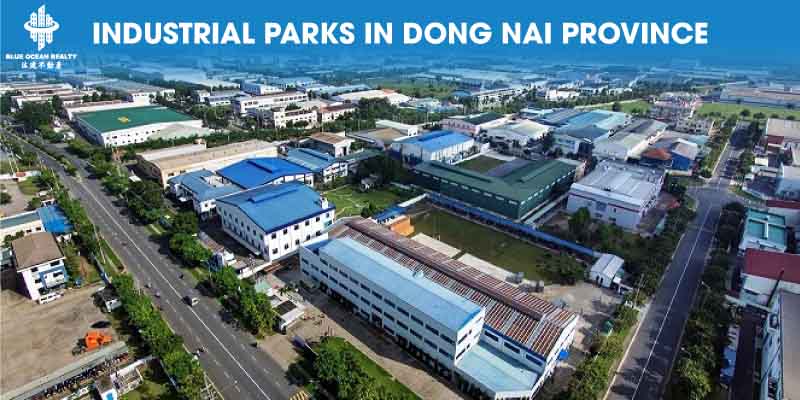
Industrial Parks in Dong Nai Province Attract Investment
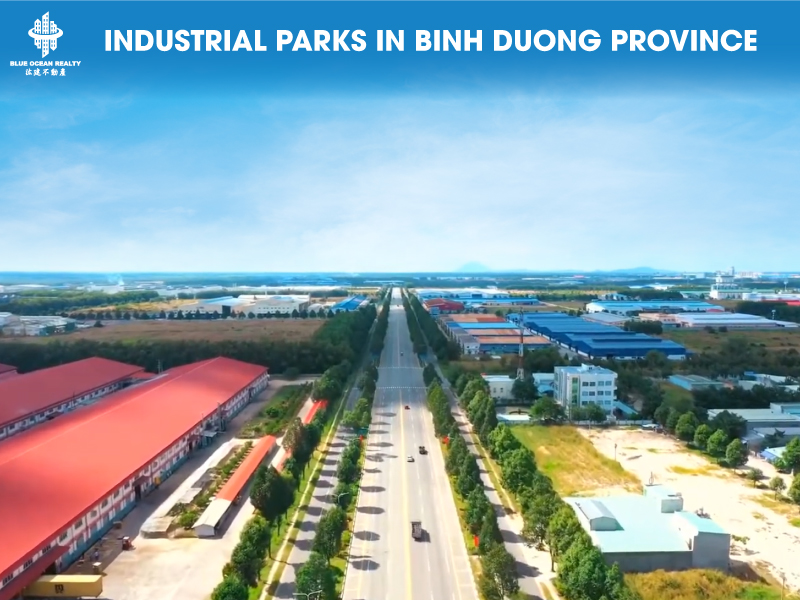
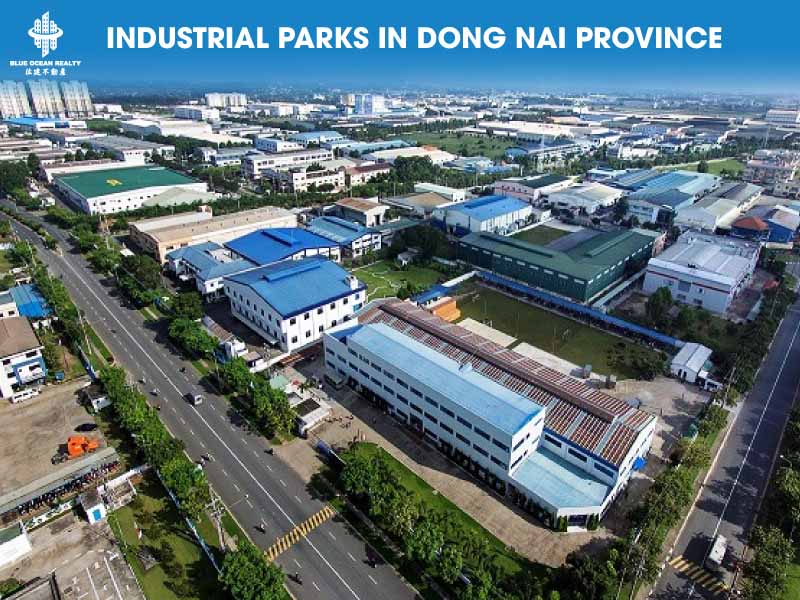
Dong Nai is one of the most industrially developed provinces in Vietnam. According to the People’s Committee of Dong Nai Province, there are 35 industrial parks (IPs) in the provincial master plan with a total area of over 12,000 hectares. Among them, 32 IPs have been fully developed and put into operation, with an average occupancy rate of 80%. Dong Nai was a pioneer in industrial development more than 20 years ago, with key industrial parks such as Amata, Bien Hoa IP, and Nhon Trach IP.
Up to now, according to the Ministry of Planning and Investment, 43 countries and territories have invested in Dong Nai, with a total registered capital of nearly USD 30.8 billion. Major capital sources come mainly from enterprises in South Korea, Taiwan, Japan, Singapore, China, and Thailand. Many large multinational corporations have established manufacturing plants in Dong Nai, such as Hyosung, Bosch, Amata, Fujitsu, Chang Shin, CP, Kenda, and Maggitt.
The main industrial zones are divided into four areas:
- Central industrial zone: Bien Hoa City – Vinh Cuu – Trang Bom – Long Thanh.
- Concentrated industrial zone: Nhon Trach – Go Dau.
- Eastern industrial zone: Long Khanh Town.
- Northern industrial zone: Tan Phu – Dinh Quan.
ATTRACTING PROJECTS WITH ADVANCED TECHNOLOGY
Dong Nai is committed to maintaining and furthering its investment attraction orientation towards projects with advanced, new, high, and clean technologies; modern management; high added value; spillover effects; and the ability to connect to global production and supply chains. The province focuses on attracting large-scale projects, strategic investors, and multinational corporations to establish headquarters, R&D centers, and innovation hubs in connection with the investment and operation of Long Thanh International Airport.
From now until 2025, Dong Nai aims for the proportion of FDI enterprises using advanced technology, modern management, environmental protection measures, and moving towards high technology to reach 80%. By 2030, this proportion is expected to reach 100%.
PRIORITY INDUSTRIES
Dong Nai welcomes investment opportunities in all sectors consistent with Vietnam’s international commitments, with particular focus on:
High-tech projects listed in the Government’s prioritized development list.
Development of supporting industries: production of parts, components, and raw materials in mechanical engineering, electronics – IT, automobile manufacturing and assembly, garment and footwear raw materials, aviation support industries, and aircraft maintenance. High-tech applications in supporting industry production are encouraged.
New material manufacturing, energy-saving projects, and environmentally friendly projects.
Investment in IT, hardware, and software production.
LONG-TERM VISION TO 2050
Dong Nai aims for its industry to lead the nation in high-tech manufacturing and remain the main growth driver in the coming years. The province will focus on supporting industries for high-value sectors both domestically and globally, while maintaining strong growth in other key industries.
The foundation for Dong Nai’s industrial breakthrough by 2050 is the advancement of science and technology, application of Industry 4.0 models, and smart manufacturing to enhance value, ensure sustainable development, and complete the entire value chain in its strong sectors.
INDUSTRIAL PARK SCALE AND STRUCTURE
By 2030, Dong Nai will have 39 industrial parks (including 31 fully developed IPs, 1 in completion, 8 not yet established, and 1 planned for removal) with a total industrial land area of 18,543 hectares. Additionally, the province proposes 3 new IPs with a combined area of 4,756 hectares, increasing the total industrial land to nearly 23,299 hectares.
THREE MAIN INDUSTRIAL GROUPS
Group 1 – Key Industries:
- Food production and processing
- Electricity and electronics
- Transportation equipment manufacturing
- Chemicals and basic chemical products
- Machinery manufacturing and precision engineering
Group 2 – Potential Industry:
- Production of pharmaceuticals, medicinal chemicals, and herbal products
Group 3 – Maintained & Restructured Industries:
- Textile, garment, and footwear
- Wood processing and wood products
- Other processing and manufacturing industries
Learn more about us:
—
Your trusted partner in Vietnam Real Estate, Industrial Parks, and Invest Vietnam.
Stay Connected:
- Fanpage: blueoceanrealtyvn
- Youtube: BlueOceanRealty , @batdongsanbor , @blueoceanrealtyvietnam
- Instagram: blueoceanrealtyvn
- Tiktok: @bortintuc
Hotline/ Zalo: +84888089696
—