Long An Province – Economic and Geographic Overview
Geographic Position
Long An Province holds a special geographic position. Although located in the Mekong Delta region, it belongs to the Southern Key Economic Zone (SKEZ). Identified as a dynamic economic driving force, Long An plays a vital role in Vietnam’s national economic development strategy.
Bordering Ho Chi Minh City, Long An maintains increasingly close economic ties with the SKEZ, especially with Ho Chi Minh City – the region that contributes 50% of the nation’s industrial output, serves as a major hub for investment and technology transfer, and is the largest consumer market for agricultural products from the Mekong Delta.
Long An is considered an extension of Ho Chi Minh City, and in recent years, it has witnessed strong transformation, attracting investors. It serves as a strategic bridge linking the Eastern and Southwestern key economic zones. In Ho Chi Minh City’s economic restructuring strategy, Long An is viewed as the most favorable location for relocating industrial plants.
Currently, Long An has 36 industrial parks and clusters, with an average occupancy rate of 80%, and is gradually becoming the industrial and service hub of the Mekong Delta region. The development of these industrial zones has accelerated urbanization, concentrated population settlements, expanded existing urban centers, and created new ones.
Development Goals
By 2030
Long An shares a 132.977 km national border with Cambodia, with two international border gates: Binh Hiep (Moc Hoa) and Tho Mo (Duc Hue). It serves as the gateway connecting the Southeast region with the Mekong Delta, particularly due to its shared boundary with Ho Chi Minh City and its transport network, including National Highways 1A and 50, and provincial roads (DT.823, DT.824, DT.825, etc.).
The province covers 4,490.20 km², ranking 34th nationwide in terms of area.
Development goals for 2030:
Become a dynamic, efficient, and sustainable economic center of Southern Vietnam.
Serve as a gateway along the urban-industrial economic corridor of the Mekong Delta, with strong connectivity to Ho Chi Minh City and the Southeast region.
Function as a vital hub for cooperation and trade with Cambodia.
Establish economic corridors, development zones, and urban growth centers, while adapting to climate change.
Ensure national defense, security, and social order.
Improve quality of life, ensuring prosperity, civility, and happiness for its people.
Vision to 2050
By 2050, Long An is projected to become:
One of the leading industrial provinces in Vietnam.
A major economic growth pole of the Mekong Delta, with a development level comparable to advanced provinces of the Southeast region.
A province characterized by social order, security, safety, and civility, with a well-developed human capital base, healthy living environment, and strong climate change resilience.
Administrative and Demographic Information
Geography & Borders
East: Ho Chi Minh City
West: Dong Thap Province
South: Tien Giang Province
North: Tay Ninh Province and the Kingdom of Cambodia
Administrative Units
Long An has 15 administrative divisions and 188 commune-level units:
1 city: Tan An (provincial capital)
1 town: Kien Tuong
13 districts: Duc Hue, Duc Hoa, Ben Luc, Can Duoc, Can Giuoc, Thu Thua, Tan Tru, Chau Thanh, Thanh Hoa, Tan Thanh, Moc Hoa, Vinh Hung, Tan Hung
Population
Total population: 2,003,000
Population density: 446 people/km²
Urbanization rate (2022): 36%
Ethnic diversity: 36 ethnic groups, with over 110 foreign residents
Religion: 11 officially recognized religions
Human Resources and Investment Environment
Long An has abundant land resources, a skilled workforce through vocational training, a friendly investment environment, streamlined administrative procedures, attractive incentives, and competitive costs, making it an ideal destination for investors.
Education
Over 500 schools across the province:
48 high schools
122 secondary schools
246 primary schools
183 kindergartens
Higher Education:
2 universities: Long An University of Economics and Industry, Tan Tao University
3 colleges, 4 vocational schools, and multiple training centers
This system has contributed to reducing illiteracy and strengthening human resource quality.
Healthcare
1 provincial hospital
11 district hospitals
8 regional clinics
183/188 communes with healthcare stations
In total, Long An has 211 medical facilities under the Department of Health, including:
16 hospitals
5 regional polyclinics
190 commune-level health stations
Total capacity: 2,807 beds
Tourism
As the gateway from Ho Chi Minh City to the Mekong Delta, Long An stretches along the Vam Co Dong and Vam Co Tay rivers. With a long history, it is home to two ancient cultures (Dong Nai and Oc Eo) and over 90 historical, cultural, and architectural sites.
Tourism highlights:
Ecotourism: Dong Thap Muoi wetland ecosystem
Cultural & Historical Sites: Nguyen Trung Truc Temple, Ton Thanh Pagoda, The Hundred-Pillar House
Festivals & Traditional Villages: Lam Chay Festival, mat weaving craft village
Local Specialties: Dragon fruit, watermelon, specialty rice
Hospitality: Hardworking, creative, and welcoming people
Transportation Infrastructure
Clearly defining “transportation infrastructure as the driving force for development,” Long An has been implementing many key transportation projects in recent years. These projects have established a seamless, arterial, and strategically interconnected intra-provincial and inter-provincial transportation system. The improvement of transportation infrastructure has enhanced competitiveness, the business investment environment, and the socio-economic landscape. Currently, Long An’s economic scale ranks first in the Mekong Delta Region, accounting for over 13% of the region’s total scale. The economic structure is rapidly shifting toward industry. Gross Regional Domestic Product (GRDP) growth in the first nine months of 2023 reached 4.93%.
Long An has determined that mobilizing all resources to build a synchronized transportation infrastructure system to serve industrial and urban development in the province’s key economic region is one of three strategic breakthrough programs for economic development that must be prioritized for implementation. Accordingly, 8 projects included in the transportation breakthrough program are: Lương Hòa – Bình Chánh Road; Hựu Thạnh – Tân Bửu Road; Provincial Road 826E; the connecting road from the Rạch Dơi Bridge access road to Provincial Road 826E; Đức Hòa Dynamic Axis Road; Tân Tập – Long Hậu Road; upgrading and expanding Provincial Road 824; and the Hùng Vương – National Highway 62 intersection.
For the 2021–2025 period, the Department of Transport has been tasked with implementing three key projects: Tân An City Ring Road and bridge across the Vàm Cỏ Tây River; Provincial Road 830E (section from the expressway interchange to Provincial Road 830); and Provincial Road 827E (National Highway 50B).
Currently, Long An is accelerating the implementation of these key projects to complete the transportation infrastructure of the key economic region, create momentum for socio-economic development, and simultaneously promote disbursement of public investment capital at the local level.
Road Transport
Major highways include:
National Highway 1A (30 km in length),
National Highway 62,
National Highway 50,
N2 Road,
Provincial Road 10,
Ho Chi Minh City – Trung Lương Expressway.
Road networks connecting industrial parks in Long An to Ho Chi Minh City are regularly maintained and upgraded, ensuring the transportation capacity of heavy-load container trucks to ports and major economic zones.
Air Transport
Tan Son Nhat International Airport – Ho Chi Minh City: Terminal capacity: 23 million passengers/year and 600,000 tons of cargo/year.
Long Thanh International Airport – Dong Nai (under construction): Terminal capacity: 100 million passengers/year and 5 million tons of cargo/year.
Waterways
Long An also has strong advantages in waterway transport, with major routes including Vàm Cỏ Đông River, Vàm Cỏ Tây River, and Rạch Cát River (Cần Giuộc River). Important waterway routes such as Ho Chi Minh City – Kiên Lương, Ho Chi Minh City – Cà Mau, and Ho Chi Minh City – Tây Ninh all pass through Long An via Nước Mặn Canal, Rạch Cát River, and Vàm Cỏ Đông River. Watercrafts of over 100 tons can travel via canals such as Phước Xuyên, Dương Văn Dương, Trà Cú, Kinh Xáng, Bến Lức River, Rạch Cát River, and Thủ Thừa Canal, connecting the Mekong Delta with Ho Chi Minh City.
River and Seaports
Bourbon Port & Hoàng Tuấn Port (river ports): Vessel capacity 5,000 DWT. Handling capacity: 550,000 tons/year.
Long An International Port: Receives ships of 50,000 – 70,000 DWT. Cargo throughput in 2020: 15 million tons/year. It serves as the central hub for imports and exports in the Mekong Delta Region and connects with Bình Hiệp International Border Gate for direct trade with Prey Voa International Border Gate in Cambodia.
Connections to nearby ports include:
Hiệp Phước Seaport – Ho Chi Minh City: Receives vessels of 50,000 – 70,000 DWT, cargo throughput of 200 million tons/year. Location: adjacent to Long Hậu Industrial Park.
Cát Lái Port – Ho Chi Minh City: Cargo throughput of 70 million tons/year.
Economic Performance in the First 9 Months of 2023
In the first nine months of 2023, Long An ranked first nationwide and 3rd among 114 public investment project owners in terms of public investment disbursement rate. According to the Ministry of Planning and Investment, Long An’s total public investment disbursement reached VND 9,845.9 billion. By October 4, 2023, the province had disbursed VND 7,098.5 billion, achieving 72.1% of the plan, higher than the same period in 2022. Long An has been dubbed the “disbursement champion” nationwide.
Budget Revenue: In the first nine months of 2023, Long An collected VND 13,754 billion, reaching 68.23% of the provincial estimate, a 15.98% decrease compared to the same period. Domestic revenue accounted for VND 11,415 billion, while import-export tax revenue was VND 2,339 billion.
GRDP Growth: According to the Department of Planning and Investment, Long An’s GRDP grew by 4.93% in the first nine months of 2023, with positive results across most sectors: Sector I increased by 3.59%, Sector II by 6.42%, and Sector III by 3.99%. In particular, Q3 growth reached an impressive 7.78%, with Sector II surging by 12.4% compared to the same period.
FDI Investment: Long An issued investment certificates for 82 FDI projects with newly registered capital of USD 543.5 million (an increase of USD 253.7 million). To date, the province has 1,215 FDI projects with total capital of USD 10,519 million; among them, 588 projects are operational with a total capital of USD 3,624 million.
Domestic Investment: In the first nine months of 2023, Long An licensed 59 domestic projects with newly registered capital of VND 42,495 billion. To date, the province has 2,191 domestic projects with a total registered capital exceeding VND 254,502 billion.
Development Goals Toward 2030 and Vision to 2045
On February 28, 2023, the People’s Committee of Long An Province issued Plan No. 489/KH-UBND to effectively implement Program No. 22-CTr/TU (December 1, 2022, Provincial Party Standing Committee) and Resolution No. 78/NQ-CP (June 18, 2022, Government) on the Action Program to implement Resolution No. 13-NQ/TW (April 2, 2022, Politburo) regarding socio-economic development and national defense in the Mekong Delta until 2030, with a vision to 2045.
By 2030, Long An strives to become a dynamic and sustainable economic hub of the Mekong Delta, ranking among the top 10 provinces with the largest economic scale nationwide, driven by green industry, automation, science, technology, and innovation. The province will have an efficiently organized and unified development space, a basically modern infrastructure network, higher living standards, ensured social security, preserved ecological environment, climate change resilience, stable defense, and public security.
Average GRDP growth for 2021–2030: ~9.0%/year.
Economic scale by 2030: 2.0–2.5 times that of 2021.
Economic structure (GRDP): Sector I: 7%, Sector II: 64%, Sector III: 29%.
GRDP per capita: VND 180 million.
Urbanization rate: 55%.
100% of communes achieving new rural standards, with over 50% reaching advanced standards.
By 2045, Long An aims to achieve breakthrough development, becoming a key growth pole of both the Mekong Delta and Ho Chi Minh City region, maintaining its position as one of the country’s leading sustainable industrial provinces. It will strike a balance between economic, social, and environmental values, proactively adapting to climate change, while ensuring strong national defense, security, political stability, and public order.
Long An Province Invests in Industrial Park Development
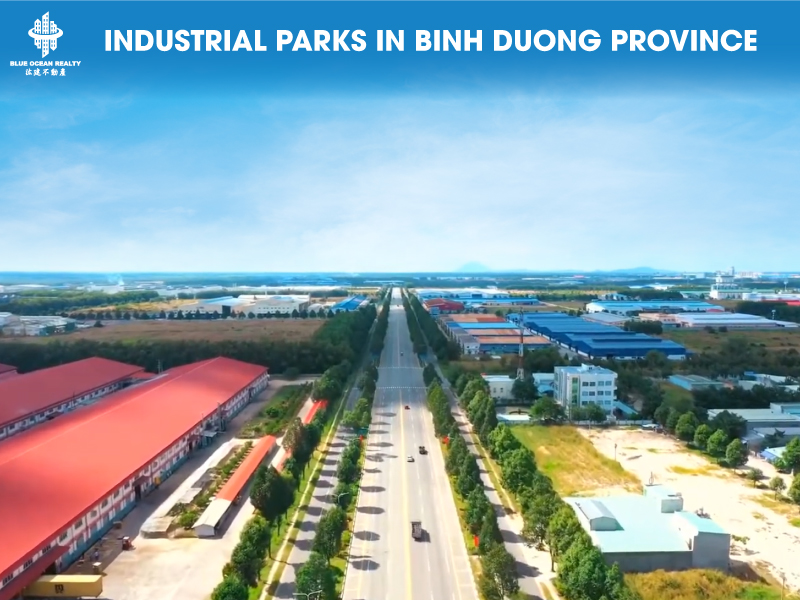
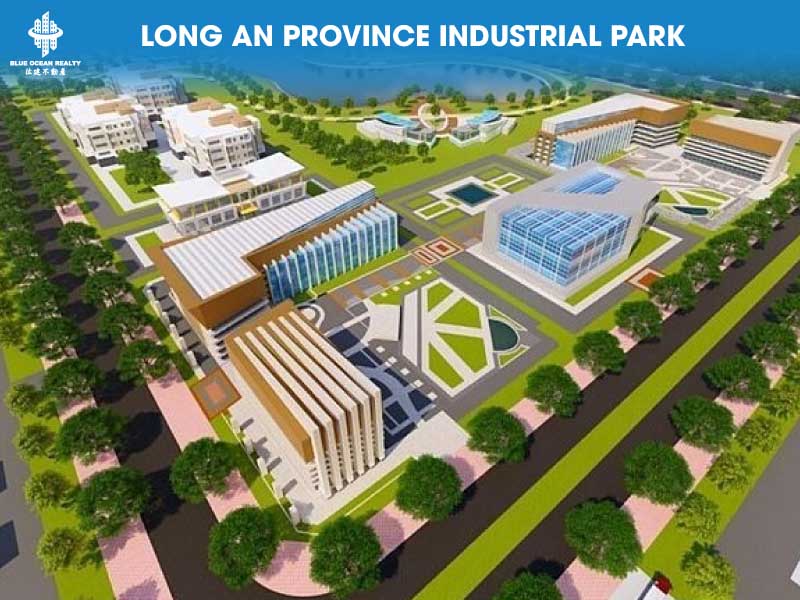
Long An Province has a strong advantage in industrial park development thanks to its location adjacent to Ho Chi Minh City, while also benefiting greatly from its role as a gateway connecting the Mekong Delta provinces with major distribution and logistics centers in Southern Vietnam. Currently, Long An has 18 operational industrial parks.
At present, the province has 28 industrial parks eligible to receive investment with nearly 4,300 hectares of industrial land, achieving an occupancy rate of nearly 66%. Among them, there are 878 foreign direct investment (FDI) projects with a total registered capital of approximately USD 6.2 billion, and 930 domestic projects with a total capital exceeding VND 133,000 billion.
For industrial clusters, the province currently has 23 operational clusters, attracting 688 projects, with more than 800 hectares of leased land; the occupancy rate of active clusters reaches 87.5%.
According to the Long An Provincial People’s Committee, the target by 2030 is to establish 17 new industrial parks with an additional area of nearly 3,200 hectares. At that time, the province will have 51 industrial parks with a total area of nearly 12,500 hectares, ranking second nationwide (after Bình Dương) in terms of industrial park area. This expansion will create favorable conditions and significant opportunities for investment attraction.
Long An prioritizes the development of processing and manufacturing industries and renewable energy, focusing on major sectors such as:
Metal production and fabricated metal products,
Mechanical engineering,
Food processing,
Electronics manufacturing,
Chemicals and chemical products,
Renewable energy.
Particularly, Long An will promote industrial development in line with technological innovation, productivity improvement, competitiveness enhancement, and efficient resource utilization. The province aims for the industrial production index to grow at an average rate of around 13% per year during 2021–2030.
In addition to industrial park expansion, Long An also plans to establish 28 new industrial clusters with a total area of more than 1,800 hectares, raising the total number of clusters in the province to 72, covering nearly 4,000 hectares.
Learn more about us:
—
Your trusted partner in Vietnam Real Estate, Industrial Parks, and Invest Vietnam.
Stay Connected:
- Fanpage: blueoceanrealtyvn
- Youtube: BlueOceanRealty , @batdongsanbor , @blueoceanrealtyvietnam
- Instagram: blueoceanrealtyvn
- Tiktok: @bortintuc
Hotline/ Zalo: +84888089696
—